
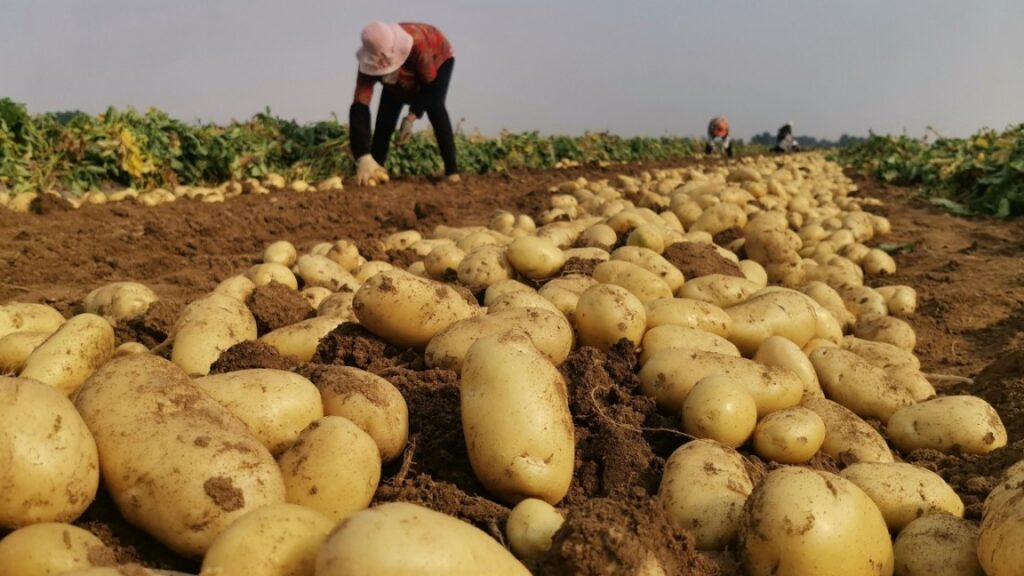
Potato farming presents a viable agricultural business opportunity in Zimbabwe, with consistent market demand from households, restaurants, fast-food outlets, agricultural markets, and food processors.
This comprehensive guide breaks down the complete business model, startup costs, operational requirements, and realistic profit projections for a 1-hectare operation during a single growing season. We also include a detailed supplier directory with contact information for seed suppliers, fertilizer companies, agricultural chemical providers, and packaging suppliers to help you get started.
Quick Summary for 1 hectare:
- Total Investment: US$6,976
- Expected Revenue: US$14,000
- Expected Yield: 35,000kg
- Net Profit: US$7,024
Land Requirements and Preparation
For potato farming, you will need 1 hectare of arable land with good drainage and reliable access to water for irrigation. Potatoes thrive in well-drained, loose soil that contains adequate organic matter. The land must be properly prepared through ploughing, harrowing, and ridging to create optimal growing conditions for your crop.
Site selection is critical for potato farming success. You should avoid waterlogged areas as potatoes are highly susceptible to rot in overly wet conditions. Ideal locations have access to irrigation water through boreholes, rivers, or municipal supply, since potatoes require consistent moisture throughout the entire growing season. Consider conducting soil tests before planting to assess nutrient levels and pH, which should ideally be between 5.0 and 6.5 for optimal potato growth.

Proper land preparation involves several stages. First, the land should be ploughed to a depth of at least 25-30 centimetres to break up compacted soil and improve aeration. Following ploughing, harrowing is performed to break down large soil clumps and create a fine tilth. Finally, ridging creates raised beds that improve drainage and make harvesting easier. This entire preparation process should be completed 2-3 weeks before planting to allow the soil to settle.
Equipment and Infrastructure Requirements
Starting a potato farming operation requires essential equipment and infrastructure to ensure efficient production and proper post-harvest handling. While the initial investment in infrastructure may seem significant, these assets will serve you for multiple growing seasons.
Basic Farm Equipment
You will need hand tools such as hoes, rakes, shovels, and wheelbarrows for day-to-day farm operations. Spraying equipment is essential for applying pesticides, herbicides, and fungicides throughout the growing season. A quality knapsack sprayer or motorised sprayer will be used frequently, so investing in durable equipment is worthwhile.

Estimated cost: US$300 to US$500
Irrigation System
A reliable irrigation system is absolutely critical for potato production. Potatoes are sensitive to water stress, and inconsistent watering can lead to misshapen tubers, reduced yields, and quality problems. Your irrigation setup should include water pumps, pipes, sprinklers or drip irrigation lines, and water storage tanks. The type of irrigation system you choose will depend on your water source, farm size, and budget. Drip irrigation is more water-efficient but has higher initial costs, while sprinkler systems are more affordable but use more water.
Estimated cost: US$1,500 to US$3,000

Tractor Services
Large equipment such as tractors for ploughing, harrowing, and ridging can be hired on a per-need basis. This approach is more cost-effective for small-scale farmers than purchasing equipment outright, as tractors require significant capital investment plus ongoing maintenance costs. Tractor hire is typically needed during land preparation and potentially during harvesting. Many agricultural service providers across Zimbabwe offer tractor services, and rates vary by region and season.
Storage Facility
A dedicated storage structure is necessary for storing harvested potatoes before they reach the market. The storage house should be well-ventilated, cool, and protected from direct sunlight to maintain potato quality and reduce post-harvest losses. Proper storage extends the shelf life of your produce significantly and allows you to wait for better market prices rather than selling immediately at potentially lower harvest-season prices.
Estimated cost: US$2,000 to US$4,000

Potato Varieties and Seed Requirements
For 1 hectare of potato farming, you will need 2,250kg of certified seed potatoes, purchased in 25kg bags. This means you will require 90 bags in total. At the current market price of US$25 per 25kg bag, your total seed cost will be US$2,250, which translates to US$1.00 per kilogram of seed.
Popular potato varieties in Zimbabwe include:
- BP1 – the most widely grown variety, known for its high yields and good storage qualities
- Mondial – produces smooth, oval tubers preferred by the chip-making industry
- Diamant – an early-maturing variety with excellent disease resistance
- Pimpernel, Amethyst, Garnet, and Jasper – each suited to different market preferences and growing conditions
Using certified seed potatoes is essential for achieving optimal yields. Certified seed ensures disease-free planting material and provides better germination rates and yields compared to using table potatoes as seed. While certified seed costs more initially, the investment pays off through higher productivity and reduced disease pressure throughout the growing season.

Growing Season and Time to Maturity
Understanding the growth cycle of potatoes is essential for planning your production schedule and marketing strategy. The time from planting to harvest varies depending on the variety you choose and environmental conditions.
Growth Stages:
- Weeks 1-2 (Emergence): Seed potatoes sprout and shoots emerge from the soil. Keep soil consistently moist but not waterlogged.
- Weeks 3-6 (Vegetative Growth): Plants develop leaves and stems. This is when earthing up (hilling) should be performed to encourage tuber formation.
- Weeks 7-10 (Tuber Initiation): Tubers begin forming underground. Flowering may occur during this period. Maintain consistent irrigation.
- Weeks 11-14 (Tuber Bulking): Tubers grow rapidly in size. This is the most critical period for water and nutrient management.
- Weeks 15-20 (Maturation and Harvest): Foliage begins to yellow and die back. Stop irrigation 2 weeks before harvest. Tubers are ready when skin sets firmly.
On average, potatoes take 4 months from planting to harvest, though some varieties may require up to 5 months to reach full maturity. Early maturing varieties can be ready in as little as 3 to 3.5 months, while late maturing varieties need the full 5 months. Your choice of variety should consider your production schedule, market timing, and whether you plan to grow multiple crops per year.

Fertilizer and Soil Amendment Requirements
Proper fertilization is essential for achieving optimal yields and tuber quality. Potatoes are heavy feeders that require substantial amounts of nitrogen, phosphorus, and potassium, along with various micronutrients. A well-planned fertilization programme will ensure your crop receives the nutrients it needs at each growth stage.
Fertilizer Requirements for 1 Hectare:
| Fertilizer Type | Quantity | Unit Price | Total Cost |
|---|---|---|---|
| Compound C Fertilizer (balanced NPK for early growth) | 850kg (17 bags) | US$35 / 50kg bag | US$595.00 |
| Potato Blend Fertilizer (specialized formulation) | 650kg (13 bags) | US$40 / 50kg bag | US$520.00 |
| Gypsum (improves soil structure and calcium) | 300kg (6 bags) | US$10 / 50kg bag | US$60.00 |
| Potassium Nitrate Fertilizer (for tuber development) | 300kg (6 bags) | US$66 / 50kg bag | US$396.00 |
| Total Fertilizer Investment | US$1,571.00 |
Compound C fertilizer provides a balanced supply of nitrogen, phosphorus, and potassium that supports vigorous early growth and root development. The potato blend fertilizer is specifically formulated for potato production, with nutrient ratios optimized for tuber development. Gypsum improves soil structure and provides calcium, which is essential for preventing common potato defects such as hollow heart and internal brown spot. Potassium nitrate supplies additional potassium during the critical tuber bulking stage, improving both yield and tuber quality.

Crop Protection and Chemical Requirements
Protecting your potato crop from pests, diseases, and weeds is essential for achieving the projected yields. Potatoes are susceptible to numerous fungal diseases, insect pests, and weed competition, all of which can significantly reduce your harvest if not properly managed.
Crop Protection Inputs for 1 Hectare:
| Input Category | Products | Quantity | Unit Price | Total Cost |
|---|---|---|---|---|
| Herbicides | S-metalachlor, Fusilade forte | 5 litres | US$12.00 / litre | US$60.00 |
| Fungicides | Triademanol, Chlorothalonil, Ridomil Gold | 25 litres | US$15.00 / litre | US$375.00 |
| Pesticides | Velum (nematicide), Lambda, Ampligo | 10 litres | US$10.00 / litre | US$100.00 |
| Total Crop Protection Investment | US$535.00 |
Herbicides control weeds that compete with potatoes for nutrients, water, and sunlight. Products like S-metalachlor are applied pre-emergence to prevent weed germination, while Fusilade forte targets grass weeds post-emergence. Fungicides are perhaps the most critical crop protection inputs, as fungal diseases like late blight can devastate an entire crop within days if left unchecked. A preventive spraying schedule is essential, especially during wet weather when disease pressure is highest. Pesticides control insects and nematodes that damage plants and tubers, reducing both yield and quality.

Important: Always follow manufacturer instructions for application rates and safety precautions. Use appropriate personal protective equipment when handling and applying agricultural chemicals. Observe pre-harvest intervals to ensure chemical residues have degraded before harvesting. Keep records of all chemical applications for traceability and food safety compliance.
Packaging and Market Preparation
Proper packaging ensures your potatoes reach the market in good condition and command better prices. Quality packaging protects produce during transport and storage while enhancing product presentation to buyers.
For an expected yield of 35,000kg, you will need approximately 3,500 bags, assuming 10kg per bag for retail packaging. At US$0.10 per bag, your total packaging cost will be US$350.00.

The type of packaging you use may vary depending on your target market. Wholesalers typically prefer larger bags of 25kg or 50kg, while retail customers may prefer smaller 5kg or 10kg bags. Some premium markets may require branded packaging or specific bag types.
Labour Requirements
Potato farming is a labour-intensive enterprise that requires workers for various activities throughout the growing season. For a 1-hectare operation, you will need 2 full-time farm workers throughout the 4-month growing season, with additional casual workers during peak periods.
Labour Activities Throughout the Season:

- Land preparation and planting
- Fertilizer application and top-dressing
- Weeding and earthing up
- Spraying and crop monitoring
- Irrigation management and system maintenance
- Harvesting and sorting
- Packing and loading for market
Labour Costs for 1 Hectare (4-Month Season):
| Labour Type | Details | Total Cost |
|---|---|---|
| Full-Time Workers | 2 workers × US$120/month × 4 months | US$960.00 |
| Part-Time/Casual Labour | Peak periods: planting, weeding, harvesting | US$400.00 |
| Total Labour Cost | US$1,360.00 |
Part-time labour costs cover additional casual workers needed during peak periods when the workload exceeds the capacity of your permanent staff. Planting, weeding, and harvesting are particularly labour-intensive activities that typically require extra hands. Budget adequately for these peak periods to ensure timely completion of critical tasks.
Fuel and Machinery Costs
Operating a potato farm requires fuel for irrigation pumps, transport, and hired machinery. These costs, while sometimes overlooked in planning, are essential for smooth operations.
Fuel and Machinery Costs for 1 Hectare:
| Item | Details | Total Cost |
|---|---|---|
| Diesel | 200 litres × US$1.55 per litre | US$310.00 |
| Machinery Hire | Ploughing, harrowing, ridging, harvesting | US$300.00 |
| Total Fuel and Machinery Costs | US$610.00 |
Diesel is required primarily for running irrigation pumps, which will operate throughout the growing season. Additionally, you may need fuel for transport to fetch inputs and deliver produce to market. Machinery hire covers tractor services for land preparation activities. Many small-scale farmers find it more economical to hire machinery rather than purchasing equipment that would sit idle for most of the year.
Other Production Costs
Additional operational expenses total US$300.00 and cover various miscellaneous items necessary for running your farming operation:
- Irrigation system maintenance and repairs
- Storage bags and containers
- Transport costs for inputs and produce
- Miscellaneous supplies and tools
- Communication and coordination costs
While these costs may seem minor compared to major inputs like seed and fertilizer, they add up over the season and should be budgeted for to avoid cash flow surprises. Having a contingency fund for unexpected repairs or needs is also advisable.
Complete Production Costs Summary
Understanding your total investment is crucial for assessing the viability of your potato farming operation and securing any necessary financing. Below is a comprehensive breakdown of all costs involved in producing potatoes on 1 hectare.
Variable Costs Breakdown:
| Cost Category | Amount (USD) |
|---|---|
| Potato Seeds (2,250kg) | US$2,250.00 |
| Compound C Fertilizer | US$595.00 |
| Potato Blend Fertilizer | US$520.00 |
| Gypsum | US$60.00 |
| Potassium Nitrate Fertilizer | US$396.00 |
| Herbicides | US$60.00 |
| Fungicides | US$375.00 |
| Pesticides | US$100.00 |
| Packaging Material | US$350.00 |
| Diesel | US$310.00 |
| Machinery Hire | US$300.00 |
| Other Production Costs | US$300.00 |
| Subtotal Variable Costs | US$5,616.00 |
| Labour Costs (Full-time + Part-time) | US$1,360.00 |
| TOTAL PRODUCTION COST | US$6,976.00 |
Cost Per Kilogram: US$6,976.00 ÷ 35,000kg = US$0.20 per kilogram
This is an important metric for understanding your break-even point and determining minimum acceptable selling prices.
Revenue Projections
With proper management practices and favourable conditions, a well-run potato operation can achieve impressive yields. Based on industry averages for Zimbabwe, we project the following revenue potential for your 1-hectare operation.
Expected Yield: 35,000kg per hectare
This represents the industry average for well-managed operations in Zimbabwe. Yields can vary significantly based on variety selection, soil quality, weather conditions, irrigation management, and pest and disease pressure. Some high-performing operations achieve yields of 40,000kg or more per hectare, while poorly managed farms may produce significantly less.
Expected Selling Price: US$0.40 per kilogram
This represents the wholesale price for selling to wholesalers and retailers. It is important to note that potato prices fluctuate based on season, supply levels, and quality. Prices tend to be higher when supply is limited, typically between seasons, and lower immediately after harvest when many farmers are selling simultaneously.
Total Revenue: 35,000kg × US$0.40 = US$14,000.00 per hectare per season
Profitability Analysis
The following analysis demonstrates the profit potential of a 1-hectare potato farming operation based on the costs and revenue projections outlined in this guide.
Profit Calculation:
| Amount | |
|---|---|
| Total Revenue (35,000kg × US$0.40) | US$14,000.00 |
| Total Production Costs | US$6,976.00 |
| NET PROFIT PER SEASON | US$7,024.00 |
This represents a profit margin of approximately 50%, which is considered excellent for agricultural enterprises. However, it is crucial to understand that this represents a best-case scenario where yields meet expectations, prices remain stable, and no major problems occur. Real-world results may vary based on numerous factors discussed in the risk management section below.
Potato Farming Business Plan
A potato farming business plan serves as a practical roadmap that outlines how your farming operation will be structured, financed, and managed from planting to market. It clearly defines your production scale, target market, input requirements, cost structure, and expected returns. For a 1-hectare potato operation in Zimbabwe, the business plan helps you quantify the total investment of US$6,976, forecast realistic yields of approximately 35,000kg, and project revenue and profit with clarity. This level of planning is essential for making informed decisions before committing capital.
From an operational perspective, the business plan details key activities such as land preparation, seed sourcing, fertilizer application schedules, irrigation management, pest and disease control, harvesting, storage, and marketing. It also identifies critical risks such as price fluctuations, disease outbreaks, weather variability, and input cost increases, while outlining mitigation strategies like crop rotation, preventive spraying, reliable irrigation, and access to storage facilities. This structured approach reduces uncertainty and improves the likelihood of achieving projected yields and profits.
A well-prepared potato farming business plan is also a valuable tool when seeking external support. Financial institutions, investors, input suppliers, and contract buyers often require a clear plan before offering financing, credit facilities, or off-take agreements. Even if you are self-financing, the business plan allows you to track performance against projections, adjust strategies during the season, and plan for expansion into additional hectares or multiple production cycles per year.
Understanding Your Market
Before investing in potato production, it is essential to understand the various market segments available and their specific requirements. Zimbabwe’s potato market serves diverse customer segments, each with different needs and preferences.
Retail Markets: Households purchase potatoes weekly as a staple food. Quality, size consistency, and cleanliness drive purchasing decisions.
Food Service: Restaurants, hotels, and fast-food outlets require consistent supply of specific sizes and varieties. These buyers often pay premiums for reliability.
Processing Industry: Chip manufacturers and food processors need large volumes of specific varieties. Long-term contracts provide market security.
Wholesale Markets: Mbare and other municipal markets move large volumes. Prices are competitive but payment is immediate.
Export Markets: Regional markets in Zambia, Malawi, and Mozambique offer opportunities during off-seasons in those countries.
Developing relationships with buyers before planting is advisable. Knowing your market helps you select appropriate varieties, plan harvest timing, and negotiate better prices. Contract farming arrangements with processors or large buyers can provide price security and guaranteed markets.
Real-World Challenges and Risk Management
While the profit potential of potato farming is attractive, it is important to understand and prepare for the challenges you may face. Successful farmers develop strategies to mitigate these risks.
Disease and Pest Pressure
Late blight, bacterial wilt, and nematodes can devastate crops. Implement strict crop rotation, use certified seed, and maintain rigorous spraying schedules. Never plant potatoes in the same field two seasons in a row.
Price Volatility
Potato prices fluctuate significantly based on season and supply. Consider storage facilities to hold produce for better prices, or develop reliable buyer relationships to secure consistent markets.
Weather Dependency
Excessive rainfall causes rot, while drought stress reduces yields. Reliable irrigation systems are essential for consistent production. Monitor weather forecasts and adjust irrigation accordingly.
Post-Harvest Losses
Without proper storage, potatoes deteriorate quickly, especially in hot weather. Investment in cool storage or quick market turnover is crucial to preserve quality and value.
Input Cost Fluctuations
Fertilizer and chemical prices can increase significantly, affecting profitability. Bulk purchasing during low-price periods and building relationships with suppliers helps manage costs.
Market Access
Transportation costs and market access can erode profits, especially in remote areas. Developing relationships with buyers and aggregators helps secure consistent markets.
Supplier Directory
Disclaimer: The supplier contact details provided in this guide are for informational purposes only. ZimLedger does not have any affiliation with these suppliers, nor do we endorse or guarantee the quality, pricing, or reliability of their products and services. It is the responsibility of the reader to conduct due diligence before engaging with any supplier, including verifying their credentials, pricing, and compliance with relevant regulations.
Potato Seed Suppliers
The Seed Potato Co-Op Phone: +263 775 502 715, +263 712 939 751, +263 242 447022, +263 242 486684 Address: 21 Neil Avenue, Msasa, Harare
Edda Seeds Phone: +263 772 748 620, +263 714 085 514 Address: 23 Vernon Avenue, Greendale, Harare
Dijo Seed Group Phone: +263 719 302 408, +263 8612 401401 Address: 76 McChlery Avenue, Eastlea, Harare
National Tested Seed (Farm Shop) Phone: +263 773 260 766, +263 772 235 000 Address: 750 Mama Mafuyana Drive, Bluffhill, Harare
Lions Den Seed Phone: +263 777 834 505 Address: 14 Aintree Road, Highlands, Harare
Elite Seeds Phone: +263 772 664 148, +263 776 055 803, Arnold +263 772 320 776 Address: 138 Crowhill Road, Borrowdale, Harare
Fertilizer Suppliers
Superfert Fertilizer Phone: +263 772 143 243, +263 772 143 244 Address: 75A Kew Drive, Highlands, Harare
Omnia Fertilizer Zimbabwe Phone: +263 772 155 565, +263 772 142 707 Address: No. 7 Van Praagh Avenue, Milton Park, Harare
Farm and City Centre Phone: +263 242 251162 Address: Cnr 4th and Robson Manyika, Harare
ZFC Limited Phone: +263 242 753882 Address: 35 Coventry Road, Workington, Harare
Windmill Pvt Ltd Phone: +263 242 304520, +263 242 753784 Address: Number 21 Coventry Road, Workington, Harare
Equipment, Pesticides, Herbicides, and Agrochemicals
Veterinary Distributors Phone: +263 242 793753, +263 771 054 502 Address: Corner Fourth St & Kenneth Kaunda Ave, Harare
Farm and City Centre Phone: +263 242 251162 Address: Cnr 4th and Robson Manyika, Harare
Wimpat Marketing Hardware & Vet Phone: +263 774 830 726 Address: Cnr 2nd and South Avenue, Harare
Shalom Agrochemicals Phone: +263 242 792381 Address: Cnr 2nd and South Avenue, Harare
Agricura Phone: +263 772 144 440, +263 242 621570 Address: 62 Birmingham Road, Southerton, Harare
CP Chemicals Phone: +263 777 431 954, +263 787 719 057, +263 773 476 619, +263 242 303515 Address: 112 Seke Road, Graniteside, Harare
Chems Africa Phone: +263 773 550 396 Address: Deula Center, Bay 5, 10 Spurn Road, Ardbennie, Harare
Potato Packaging Suppliers
Polypackaging Phone: +263 776 077 681, +263 771 692 180 Address: 897/898 Soutter Road, New Ardbennie, Harare
Mbare Musika Retail Market Packaging materials are also available from vendors at Mbare Musika Retail Market.

ZimLedger
ZimLedger is the all in one business and finance platform for Zimbabwe. It generates quotes, invoices, payslips and financial statements, manages business ledgers, tracks income and expenses, and builds shopping lists. ZimLedger offers a simple yet powerful solution tailored to local needs. Whether you are budgeting in ZiG or USD, managing business accounts, converting Ecocash statements, or tracking household expenses, ZimLedger empowers you to stay organised, make informed financial decisions, and grow your wealth—right from your phone or computer.

Very informatuve, thank you