
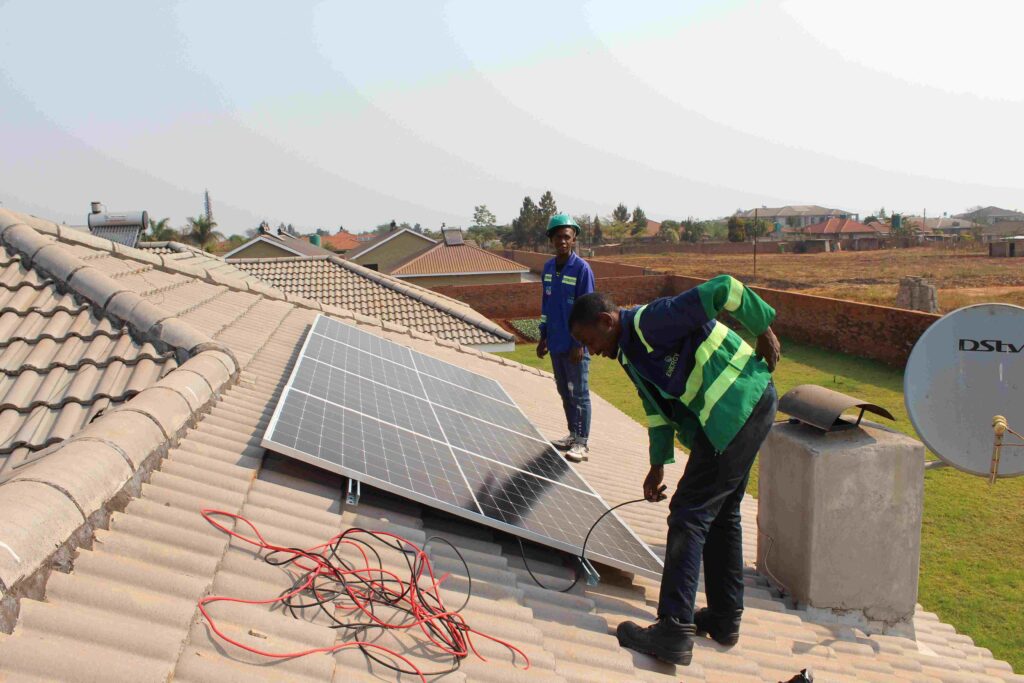
The Opportunity That Is Lighting Up Zimbabwe
If you have been watching the Zimbabwean economy closely, you will have noticed something remarkable happening in neighbourhoods across Harare, Bulawayo, Mutare, and beyond. Solar panels are appearing on rooftops everywhere. Businesses are advertising solar systems on every street corner. WhatsApp groups are buzzing with solar deals.
This is not a coincidence. This is an opportunity.
Despite the numerous promises by ZESA that load shedding is coming to an end, it remains a present reality in Zimbabwe. Households and businesses continue to experience unpredictable power cuts that disrupt daily life and commerce. Beyond load shedding, ZESA’s penetration still leaves a lot to be desired. Many rural areas remain completely unconnected to the grid. Farming communities that need power for irrigation, cold storage, and processing have no access to electricity.
In urban areas, homeowners need reliable backup power to protect their food, run their businesses from home, and keep their families comfortable. New residential areas sprouting up across the country are not yet connected to the grid, leaving residents with no choice but to seek alternative power solutions. Businesses of all sizes need backup power to protect their operations from the losses caused by unexpected outages.
The solar installation business has emerged as one of the most profitable and in-demand ventures in the country right now. And the best part? You can start with different entry points depending on your capital.

Why Solar Installation Works in Zimbabwe
The demand is everywhere. From suburban homes in Borrowdale to rural homesteads in Mutoko, from tuckshops in Mbare to commercial farms in Mazowe, everyone needs reliable power.
Here is why this business works:
– Constant demand: Every home, office, school, and church needs reliable power
– Recurring revenue: Customers come back for upgrades, maintenance, and expansions
– High margins: Installation services command premium pricing
– Growing market: As ZESA struggles continue, more customers enter the market daily
– Multiple revenue streams: You can sell products, offer installation, and provide maintenance
Real Market Prices in Zimbabwe
Here is what solar businesses are currently charging in the Zimbabwean market:

Complete Solar System Packages
– 1.5kVA — $550 – $750 — Powers lights, TV, phone charging, WiFi
– 3.2kVA — $850 – $1,200 — Powers fridge, TV, lights, small borehole pump
– 5kVA – 6.2kVA — $1,500 – $2,000 — Powers full home including washing machine
– 8.2kVA — $2,300 – $2,800 — Powers large home or small business
– 10kVA+ — $3,300+ — Commercial applications
Installation Labour Charges
– Basic system installation (up to 3.2kVA) — $100 – $150
– Medium system installation (5kVA – 6.2kVA) — $150 – $200
– Large system installation (8kVA+) — $250 – $350
– Borehole pump solar connection — $80 – $150
– Troubleshooting and repairs — $20 – $50 per visit
How to Start: Four Entry Points
Entry Point 1: Installation Services Only (Capital: $300 – $1,000)
This is the lowest barrier to entry and requires minimal capital. You provide labour and expertise while the customer purchases their own equipment from suppliers.

What you need:
– Basic electrical knowledge and solar installation training
– Tool kit (multimeter, crimping tools, drill, spanners, screwdrivers)
– Safety equipment (harness, gloves, safety boots)
– Transport (can start with public transport for smaller jobs)
– WhatsApp Business for bookings and communication
How it works:
– Customer buys panels, batteries, inverter, and accessories from a supplier
– You charge labour fees for installation and commissioning
– You can partner with solar product dealers who refer customers to you
Realistic monthly income: $400 – $1,200 (based on 8-15 installations)
Entry Point 2: Solar Accessories Reseller (Capital: $500 – $2,000)
You purchase solar accessories in bulk and resell them at a markup.

What to stock:
– Solar flood lights (buy at $15-20, sell at $30)
– Motion sensor lights (buy sets, sell individually)
– Solar cables and connectors
– Mounting brackets and rails
– Protection kits (AVS, SPD, breakers)
Where to sell:
– Facebook Marketplace
– WhatsApp Status updates
– Local hardware shops (on consignment)
– Construction sites
Realistic monthly income: $300 – $800
Entry Point 3: Solar Products Dealer (Capital: $5,000 – $15,000)
At this level, you stock complete systems and components, operating from a shop or office.

What you need:
– Small shop or office space (CBD or high-traffic area)
– Stock of panels, batteries, and inverters
– Display samples
– WhatsApp Business catalogue
– Facebook page with regular posts
Services to offer:
– Walk-in sales
– Delivery (charge $5-10 in town)
– Basic consultation
– Referral partnerships with installers
Realistic monthly income: $1,500 – $4,000
Entry Point 4: Full Solar Installation Company (Capital: $15,000 – $40,000)
This is the complete business model with the highest returns.

What you need:
– Registered company
– Workshop or warehouse space
– Delivery vehicle (pickup truck ideal)
– Installation tools and safety equipment
– Trained installation team (2-4 technicians)
– Stock of systems and components
Services to offer:
– Site assessment and load analysis
– Custom system design
– Full installation and commissioning
– After-sales support and maintenance
– Warranty service
Realistic monthly income: $5,000 – $15,000+
Success Strategies From the Market
Based on what successful solar businesses in Zimbabwe are doing:

1. Offer Complete Packages With Clear Pricing
Customers want to know exactly what they are getting and what it costs. The most successful businesses advertise complete packages that include the inverter, lithium battery, solar panels, mounting kit, all accessories, automatic changeover switch, and free installation within a specified area. When customers see everything included in one price, they feel confident making the purchase.
2. Provide Free Installation in Your Area
Many businesses are offering free installation within Harare as a competitive advantage. This is factored into the package price but creates perceived value.
3. Offer Flexible Payment Terms
– Several successful businesses advertise:
– “Pay 70% deposit and balance after installation”
– “Cash on delivery available”
– “Laybye options”

4. Build Trust Through Warranty
Advertise your warranty prominently. Customers are wary of cheap products that fail quickly. A 1-year or 2-year warranty builds confidence.
5. Expand Your Geographic Reach
Successful businesses operate in multiple cities. Consider opening branches or partnering with agents in:
– Bulawayo
– Mutare
– Gweru
– Masvingo
– Kadoma
6. Use WhatsApp and Facebook Aggressively
Every successful solar business has:
– Active Facebook page with daily posts
– WhatsApp Business number prominently displayed
– Product catalogues on WhatsApp Business
– Regular promotional content

Target Market Segments
Residential Customers
– Homeowners tired of load shedding
– Families with school children needing power for studies
– Work-from-home professionals
– Retirees seeking reliable power
– New housing developments not yet connected to the grid
Commercial Customers
– Small shops and tuckshops
– Butcheries (fridges and freezers)
– Hair salons
– Internet cafes
– Offices

Institutional Customers
– Schools
– Churches
– Clinics
– NGOs
Agricultural Customers
– Farmers needing borehole pumps
– Poultry operations
– Irrigation systems
– Rural homesteads with no grid access
Your Action Plan: Week by Week
Week 1: Research and Planning
– Visit 3-5 solar shops in your area
– Get price lists from suppliers
– Identify your entry point based on capital
– Register a WhatsApp Business account
Week 2: Setup
– Secure your location (shop, home office, or market stall)
– If starting with installation services, invest in quality tools
– Order initial stock (if going the reseller or dealer route)
– Create your Facebook business page
– Design your price list
Week 3: Launch
– Post your first products or services on Facebook
– Share on WhatsApp Status
– Tell everyone you know
– Offer an opening special
Week 4: Scale
– Analyse what sold best or which services are most requested
– Restock popular items or expand your service offerings
– Build relationships with complementary businesses
– Ask satisfied customers for referrals
The Bottom Line
The solar installation business in Zimbabwe is not a future opportunity. It is happening right now. Every day that load shedding continues, every new housing development that waits for ZESA connection, every rural community without grid access, every business that loses stock to power cuts — these all represent customers looking for solutions. The businesses that are visible, trustworthy, and well-stocked are capturing this demand.
You do not need to start big. You can begin as an installer with just your skills and a toolkit, or as a small accessories reseller, and grow into a full installation company over time. What matters is that you start.
The sun is shining on this opportunity. The question is: will you capture it?
Here is to building a brighter future, one panel at a time.
ZimLedger Admin

ZimLedger
ZimLedger is the all in one business and finance platform for Zimbabwe. It generates quotes, invoices, payslips and financial statements, manages business ledgers, tracks income and expenses, and builds shopping lists. ZimLedger offers a simple yet powerful solution tailored to local needs. Whether you are budgeting in ZiG or USD, managing business accounts, converting Ecocash statements, or tracking household expenses, ZimLedger empowers you to stay organised, make informed financial decisions, and grow your wealth—right from your phone or computer.

Excellent