Dear Trevor,
Nice car.
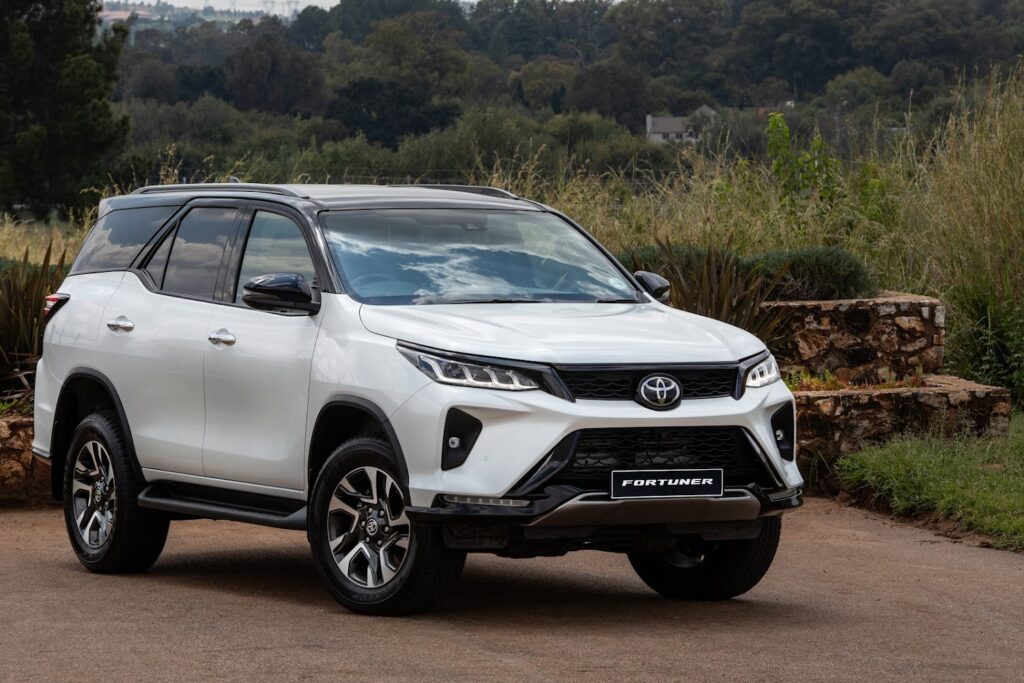
That Toyota Fortuner GD6 looks impressive in your WhatsApp profile picture. It looks even better parked outside the bar on Friday evenings when your friends gather around to admire it. The leather seats. The touchscreen. The way people look at you when you drive past.
You worked hard for that car. You saved. You sacrificed. You finally got the vehicle you always dreamed of.
But Trevor, I need to ask you something.

Where do you live?
You are 36 years old. You have been working for twelve years. You earn a decent salary. You drive a $35,000 vehicle.
And you rent.

You pay $600 every month to a landlord. Money that disappears. Money that builds someone else’s wealth. Money that will never come back to you.
Meanwhile, your Toyota Fortuner loses value every single day. The moment you drove it off the lot, it became worth less. In five years, it will be worth half of what you paid. In ten years, it will be worth almost nothing.
Trevor, your car is eating your future. And you do not even see it happening.

The Maths You Have Been Avoiding
Let me show you what your choices have actually cost you.
You bought the Toyota Fortuner for $35,000 cash. In five years, that Fortuner will be worth maybe $15,000 if you are lucky and it is well maintained. You will have lost $20,000 in depreciation alone.
Now let us add running costs. Fuel for a vehicle that size — at least $300 per month if you drive regularly. Insurance — $700 per term, which is about $175 per month. Maintenance, tyres, services — average $150 per month. That is $625 per month, or $7,500 per year, or $37,500 over five years.

Total cost of owning the Toyota Fortuner for five years: $35,000 purchase + $37,500 running costs = $72,500. Asset value remaining: $15,000. Net cost: $57,500.
Fifty-seven thousand five hundred dollars. Gone.
Now let us look at what that money could have done.

A residential stand in smaller towns costs $5,000 to $10,000. A decent stand in Harare costs $12,000 to $25,000. For the price of your Fortuner, you could have bought two or three stands outright — land that appreciates instead of depreciates.
That $8,000 stand you could have bought five years ago? It is worth $16,000 today. The $15,000 stand? Now worth $30,000. While your car was losing $20,000 in value, the land was doubling.
The difference is not just money. It is direction. Your car takes you backwards. Land takes you forward.

The Lie You Tell Yourself
You have reasons for the car. You have told yourself these reasons so many times you believe them.
“I need a reliable vehicle for work.”
Do you? Does your job actually require a $35,000 SUV? Or would an $8,000 Honda Fit get you to work just as effectively? The difference — $27,000 — is two stands. A foundation. A future.
“The Toyota Fortuner is safer for my family.”
Is your family safer in an expensive car while living in a rented house that could be taken away with 30 days notice? Is your family more secure with a depreciating vehicle and no property, or with a modest car and land in their name?

“I can get any lady I want with this car.”
This is poverty mentality dressed in expensive clothing. You are attracting women with a depreciating asset instead of building actual wealth that would make you a worthy partner. The woman impressed only by your Toyota Fortuner will leave when the Fortuner is gone — or when someone with a Land Cruiser appears. The woman worth keeping is looking at what you own, what you are building, and where you are going. She wants a man with a future, not a man with a car payment and a landlord. You are trading your legacy for temporary attention from people who do not actually care about you.
“It is an investment. I can sell it if I need to.”
It is not an investment. Investments grow in value. Your car loses value every day. Yes, you can sell it — for less than you paid. That is not investing. That is slow-motion losing.
“You only live once. I deserve nice things.”
You do deserve nice things. But do you deserve them now, at the cost of your future? Or would you rather have modest things now and wealthy things later? The man who drives a Vitz today and owns three properties tomorrow is wealthier than the man who drives a Toyota Fortuner today and owns nothing forever.

“A stand can wait. I am still young.”
You are 36. You are not young. Every year you delay, land prices rise. Every year you drive an expensive car instead of buying property, the gap widens. The stand that costs $8,000 today will cost $15,000 in five years. Your car will be worth $15,000 in five years. The maths gets worse with every passing year.
What Your Father’s Generation Understood
Talk to the men who built wealth in Zimbabwe. The ones who own properties, who have something to pass down, who are not still renting in their sixties.
Ask them what they drove when they were your age.

They will tell you about the Datsun 120Y. The Peugeot 504. The old Toyota Corolla held together with prayers and determination. They will tell you about cars that were embarrassing, uncomfortable, unreliable.
But they will also tell you about the stand they bought when they were 28. The house they built brick by brick while driving that embarrassing car. The property they added when everyone else was upgrading vehicles.
They understood something your generation has forgotten: a car is transport. Property is wealth.

They sacrificed comfort and status in their thirties so they could have security and legacy in their sixties. They drove what they could afford so they could own what would appreciate.
You are doing the opposite. You are driving what you cannot afford and renting what you should own.
The Status Trap
Let us be honest about what is really driving this decision.
You want people to see you in that Toyota Fortuner. You want the respect. You want the admiration. You want to look successful, even if you are not actually building success.
This is the status trap. And it is keeping an entire generation of Zimbabwean men poor.
You buy the car to look wealthy. But the car prevents you from becoming wealthy. You impress people today at the cost of impressing no one tomorrow. You trade long-term freedom for short-term admiration.
And here is the cruel part: the admiration does not even last. In two years, there will be a newer model. Your Toyota Fortuner will look dated. Someone else will have the latest version. The status you bought will fade, but the debt and the lost opportunity will remain.
Meanwhile, land does not go out of style. A stand bought in 2015 is still a stand in 2025 — worth twice what it was. Property does not need a new model every year. Property just quietly, steadily, relentlessly grows in value.
The Rental Trap
Every month, you pay $600 to your landlord.
That is $7,200 per year. Over ten years, that is $72,000. Money you will never see again. Money that built your landlord’s wealth, not yours.
If you had bought a stand ten years ago and built even a basic structure, you would own it outright by now. No rent. No landlord. No fear of eviction. Just a property in your name that appreciates while you sleep.
Instead, you are ten years older with nothing to show for $72,000 in rent payments.
And what did you spend money on instead of that stand? Cars. A car in 2015 that you sold in 2019. A better car in 2019 that you traded in 2022. The Toyota Fortuner in 2022 that you are so proud of.
Three cars in ten years. Zero properties. $72,000 in rent paid. $60,000 or more spent on vehicles and their running costs.
Trevor, you have spent over $130,000 in the last decade and you own nothing. Nothing.
The Future You Are Choosing
Let me show you two versions of your next ten years.
Version One: You Keep the Toyota Fortuner
You continue driving the depreciating car. You continue paying $600 rent. You continue spending $625 per month on fuel, insurance, and maintenance. In 2030, you sell the Toyota Fortuner for something newer because it is getting old and repairs are expensive.
In 2035, you are 46 years old. You have owned four or five cars over twenty years. You have paid over $140,000 in rent. You still own no property. You are still one landlord’s decision away from having to move. You have nothing to pass to your children.
Version Two: You Sell the Toyota Fortuner
You sell the Toyota Fortuner for $28,000. You buy a reliable Honda Fit for $8,000. You move from your $600 rental to a modest $300 cottage — your ego takes a hit, but your wallet breathes. You use the remaining $20,000 to buy a stand outright with money left over. You take the $625 per month you were spending on the Toyota Fortuner and redirect $400 to building on the stand and $225 to savings. The $300 you saved on rent goes straight to construction materials.
In three years, you have a basic structure. You move in. Rent drops to zero. The $300 per month that was going to your landlord now goes to improvements and a second stand.
In 2035, you are 46 years old. You own your home outright. You own a second stand that has appreciated significantly. Your cost of living is lower because you have no rent. You have assets to pass to your children. You still drive a modest car — but you drive it home to property you own.
Same person. Same income. Completely different outcomes.
The only difference is what you chose to prioritise.
The Conversation You Need to Have With Yourself
Trevor, I am not telling you to live without a car. I am not telling you that vehicles are evil. I am telling you to be honest about what you are trading.
Ask yourself:
Am I driving this car because I need it, or because I want people to see me in it?
If I sold this car and bought something modest, what could I do with the difference?
In ten years, will I be glad I had this car, or will I wish I had bought land?
What am I actually building with my money — assets that grow, or possessions that shrink?
When I die, what will I leave my children — a car that is worthless, or property that changed their lives?
These are uncomfortable questions. But uncomfortable questions lead to life-changing answers.
The Decision
You can keep the Toyota Fortuner. You can keep paying rent. You can keep telling yourself the stories about needing a good car and deserving nice things and buying a stand someday when the time is right.
Or you can make a different decision.
You can recognise that the car is transport, not wealth. You can accept that looking successful and being successful are not the same thing. You can choose to own something that appreciates instead of only owning things that depreciate.
You can sell the car. Buy a stand. Drive something modest. Build something permanent.
It will hurt your ego. Your friends might talk. The car park at work will be less impressive. Your WhatsApp profile picture will be less flashy.
But in ten years, you will own property. You will have assets. You will have something to show for decades of work. You will be able to look your children in the eye and show them what you built.
The Toyota Fortuner will be gone by then anyway — rusted, outdated, worthless.
The land will still be there. Worth more than ever. Yours forever.
Choose wisely, Trevor. Your future is watching.
With respect for your hustle and hope for your legacy,
ZimLedger Admin

ZimLedger
ZimLedger is the all in one business and finance platform for Zimbabwe. It generates quotes, invoices, payslips and financial statements, manages business ledgers, tracks income and expenses, and builds shopping lists. ZimLedger offers a simple yet powerful solution tailored to local needs. Whether you are budgeting in ZiG or USD, managing business accounts, converting Ecocash statements, or tracking household expenses, ZimLedger empowers you to stay organised, make informed financial decisions, and grow your wealth—right from your phone or computer.