
Ngatishandei nemaoko edu kuwana raramo, kwete kungochema chema daily kuti zvinhu zvakaoma!
An Open Letter to Zimbabwean Youth and Aspiring Entrepreneurs
Dear Skilled Hands,
This is Part 11 of our Skills Series — a collection of articles showing you practical skills you can learn and turn into income. Today we cover two skills that share one industry: hairdressing and barbering.
Before we go into the details, there is one concept you must understand from the very beginning. It is the single most important idea in this entire business.
There is not one hair market in Zimbabwe. There are many.
You can get a haircut for $1. You can also get a haircut for $5, $10, or more. You can get your hair done for $10 labour. You can also get your hair done for $30, $50, or $60 labour — for the exact same braids, the exact same weave, the exact same style.

Same skill. Same hands. Completely different price.
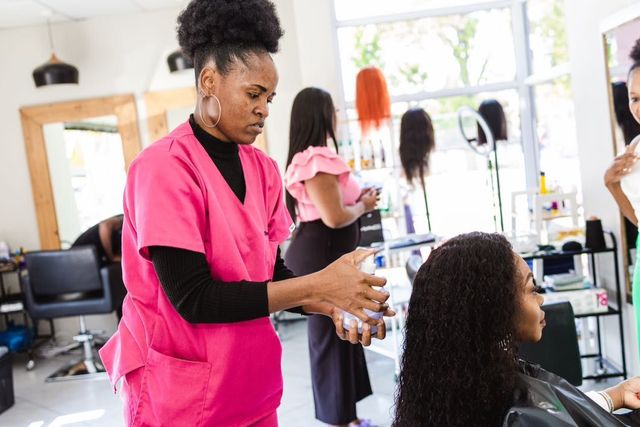
Why? Because the customer is not only paying for the haircut or the hairstyle. They are paying for the experience, the environment, the appearance, and the positioning. A $1 barber and a $10 barber may use the same clippers and perform the same cut. The difference is everything around the cut — the premises, the chair, the cleanliness, the branding, the atmosphere, and how the barber has positioned themselves in the market.
This is the most important lesson in this article: start in the cheaper market to gain experience and confidence, then deliberately move up to the higher-paying market. Your goal is not to stay where you started. Your goal is to climb.

Two Skills, One Industry
Barbering focuses primarily on men’s grooming:
– Haircuts and fades
– Clipper cuts and scissor work
– Beard trimming and shaping
– Line-ups and edge-ups
– Hot towel shaves
– Head shaves
– Children’s haircuts
– Hair dyeing for men
Hairdressing covers a broader range, with a strong focus on women’s hair in the Zimbabwean market:
– Braiding
– Weaving and sew-in installation
– Wig installation and styling
– Crocheting
– Dreadlock starting and maintenance
– Relaxing and texturising
– Hair treatments and conditioning
– Styling, curling, and blow-drying
– Hair colouring and dyeing
– Nail and makeup services (often offered alongside)
Both skills are practical, in constant demand, and can be learned relatively quickly. Both can earn you money from your very first week of working.

Why This Skill Pays Every Single Day
Hair grows. This simple biological fact is the foundation of an entire industry that never slows down.
The demand never stops. Every man needs a haircut roughly every 2-4 weeks. Every woman wants her hair done regularly — for work, for church, for weddings, for functions, or simply to look and feel good. This is not seasonal. It is not a luxury that disappears when the economy is tight. People will cut back on many things before they stop grooming their hair.
The cash flow is immediate. Unlike many businesses where you wait for payment, hairdressing and barbering pay you on the spot, in cash, every single day. A barber with a steady chair sees money daily. This makes it one of the most reliable income-generating skills available.

The startup cost is low. You can begin barbering with a set of clippers. You can begin braiding with your hands, a comb, and some hair extensions. Compared to most trades, the barrier to entry is very low.
The skill is portable. You can work in a salon, rent a chair, work from home, or visit clients at their homes. Your skill goes wherever you go.
Understanding the Different Markets
This is the concept that will determine how much money you make. Let us break it down properly.

The Low-End Market ($1-$2 haircuts, $10 hair labour)
These are operations in high-density areas, township shopping centres, market stalls, and basic premises. The equipment is minimal. The chairs are simple. The environment is functional, not fancy. The customer wants a cut or a style at the lowest possible price.
This is where most people start — and that is exactly as it should be. This market gives you something money cannot buy: practice. Volume. Repetition. The more heads you work on, the better and faster you become.
The High-End Market ($5-$10 haircuts, $30-$60 hair labour)
These are operations in low and medium density suburbs, shopping malls, and professionally fitted-out salons and barbershops. The premises are clean and well-designed. The chairs are professional. The environment feels premium. There may be air conditioning, music, refreshments, and a welcoming atmosphere.

The customer in this market is paying for far more than the haircut. They are paying for the experience and the status. And they will happily pay 5 to 10 times more than the low-end customer for what is often the same technical service.
What Separates the Two Markets
It is critical to understand that the difference between a $1 cut and a $10 cut is often not the skill. A talented barber in a township may be more skilled than one in an expensive mall. The difference is:
– Premises and location — where you operate sends a powerful message about your price
– Equipment and chairs — professional, well-maintained equipment signals quality
– Environment — cleanliness, design, comfort, and atmosphere
– Appearance — how you present yourself and your space
– Positioning and marketing — how you brand yourself and who you attract
– Skill and experience — which does matter, but is often not the deciding factor

This is more of an appearance and marketing game than a skill game. Two barbers with identical skill can earn vastly different incomes purely based on how they position themselves.
Breaking the Location Barrier With Home Visits
What if you are skilled but stuck in a low-paying area? There is a powerful solution: home visits.
By travelling to clients in higher-income suburbs, you escape the limitation of your own location. The client in Borrowdale does not see your township base — they see a professional who comes to their home, provides a quality service, and charges a premium for the convenience. Home visits and mobile services allow a skilled person to access the high-paying market without first having to afford premises there.

How Much Can You Earn?
Barbering:
– Low-end: $1-$2 per cut. A busy barber doing 15-20 cuts a day earns $15-$40 daily.
– High-end: $5-$10 per cut. A barber doing 10-15 cuts a day earns $50-$150 daily.
– A barber who owns their own well-positioned shop and employs other barbers earns from every chair, not just their own.
Hairdressing:
– Low-end: $10-$15 labour per style. A hairdresser doing 3-5 clients a day earns $30-$75 daily.
– High-end: $30-$60 labour per style. A hairdresser doing 2-3 high-end clients a day earns $60-$180 daily in labour alone.
– Specialised services — wig installations, bridal styling, premium braiding — command the highest fees.
Remember, these are labour figures. They do not include the markup you can make on selling hair extensions, products, and accessories to your clients, which adds another income stream on top of your labour.

A skilled operator who successfully moves into the high-paying market and builds a loyal client base can earn a very comfortable living — and those who grow into salon ownership can build significant wealth.
How to Learn These Skills
1. Formal Training in Zimbabwe — Hairdressing
Grande Beauty Institute
– Course: 4-in-1 Hairdressing Combo Course
– Fee: $50
– Duration: 6 months
– Location: Corner Angwa and Robson Manyika, Ahmed House, 3rd Floor, Room 306, Harare
– Contact: +263 71 860 9757
DeeRiel Beauty Academy
– Course: Full Course — Braiding, Hair Install, Nails, Makeup
– Fee: $80
– Duration: 1 month
– Location: Karigamombe Building, 4th Floor, Harare
– Contact: +263 77 861 5686

Sassy Beauty Bar
– Course: Braiding and Weaving Course plus any three courses of your choice
– Registration: $50
– Fee: $250
– Duration: 2 months
– Location: Century House, Room 205 (Next to Century Mall), Corner Nelson Mandela and Julius Nyerere, Harare
– Contact: +263 77 512 1252
IXAR Academy
– Course: Hairdressing One Month Course
– Registration: $20
– Fee: $100
– Duration: 1 month
– Location: 1144 Livingstone Avenue (Corner 2nd Street), Harare
– Contact: +263 780 454 801
Phoever Lashed Beauty Bar
– Course: Hair Installation and Wigs
– Beginners Course: $100 (1 month)
– Intermediate: $200 (1 month)
– Master Class: $150 (1 month)
– Location: 184A Fife Avenue and 9th Street, Harare
– Contact: +263 780 115 891
Vlene Beauty School
– Course: Hairdressing Course
– Fee: $70
– Duration: 3 months
– Location: 205 Sherwood Drive, Avondale West, Harare
– Contact: +263 78 409 1003
Young Africa Zimbabwe
– Course: Hairdressing Course
– Fee: $330
– Duration: 6 months on campus (4 months industrial attachment)
– Location: 21468 Mharapara Road, Chitungwiza, Zimbabwe
– Contact: +263 77 243 2270
Eve’s Beauty Academy and Training Centre
– Course: Hairdressing Course
– Registration: $10
– Fee: $50
– Duration: 1 month
– Location: Corner Harare Street and Speke, Thompson House (Opposite Margolis), Harare
– Contact: +263 71 551 1183
Centre for Business and Technical Studies
– Course: Diploma in Hairdressing
– Fee: $120 starting, then $65 monthly
– Duration: 12 months
– Location: 7th Floor, LAPF Centre, Corner Jason Moyo Street and Chinhoyi Street, Harare
– Contact: +263 77 278 4656
2. Formal Training in Zimbabwe — Barbering
IXAR Academy
– Course: Certified Barbering and Entrepreneurship Program
– Registration: $10
– Fee: $70
– Duration: 2 weeks
– Location: 1144 Livingstone Avenue, Harare, Zimbabwe
– Contact: +263 78 045 4801
People’s College
– Course: Barbering
– Fee: $50
– Duration: 1 month (2 times per week)
– Location: 55 Rezende Street, Harare
– Contact: +263 71 240 2030 | +263 78 638 9588
3. Free Online Courses
Elevify — Barbering Course
– URL: https://www.elevify.com/en/courses/beauty-fashion-and-textiles/barbering
– Free, self-paced. Covers cutting, fading, beard shaping, hygiene, tool selection, shop safety, and client care. Free certificate.
Elevify — Braiding Course
– URL: https://www.elevify.com/en/courses/beauty-fashion-and-textiles/hairdressing/braiding-course-2ca54
– Free, self-paced. Covers cornrows, twists, sectioning, parting, tension management, scalp preparation, and aftercare. Free certificate.
Cursa — Free Barbering Courses
– URL: https://cursa.app/free-courses-barbershop-online
– Completely free with a free certificate via the Cursa app. Covers cutting, shaving, trimming, colouring, and beard grooming.
4. Free YouTube Resources
YouTube is the single most powerful free resource for these skills, because hair work is visual and you can watch techniques repeatedly until you master them:
– Barbering and fades: https://www.youtube.com/results?search_query=barber+tutorial+fade+beginner
– Braiding and cornrows: https://www.youtube.com/results?search_query=hair+braiding+tutorial+beginner+cornrows
– Weaving and sew-ins: https://www.youtube.com/results?search_query=sew+in+weave+tutorial+beginner
– Wig installation: https://www.youtube.com/results?search_query=wig+installation+tutorial+beginner
5. Apprenticeship — Become an Assistant and Learn on Real Heads
No course can replace working on real people. In Zimbabwe, the most common path into hairdressing is through becoming an assistant. You get employed in a salon as an assistant, where the hairdresser gives you tasks to do — washing hair, sectioning, preparing extensions, assisting with installations — and you learn as you go. Over time, you take on more of the actual styling work until you are a fully capable hairdresser yourself.
This applies to barbering too. Find a busy salon or barbershop and offer to work there, even starting with sweeping and washing, in exchange for the chance to learn and practise. Many of Zimbabwe’s best hairdressers and barbers learned exactly this way: by starting as an assistant at the bottom of a busy shop and working their way up while watching skilled professionals every day.
Tools You Will Need to Get Started
Barbering Starter Kit ($50-$200):
– Professional hair clippers (a reliable cordless set is worth the investment)
– Trimmers for detailing and line-ups
– Clipper guards and combs
– Scissors and thinning shears
– Straight razor for finishing
– Spray bottle, neck brush, and cape
– Disinfectant and cleaning supplies for hygiene
– Mirror
Hairdressing Starter Kit ($50-$200):
– Combs (rat-tail, wide-tooth, styling combs)
– Brushes
– Sectioning clips
– Scissors
– Blow dryer
– Crochet needles (for crochet styles)
– Weaving needles and thread
– Hair extensions and products (often supplied per client)
– Mannequin head for practice
You do not need everything on day one. Start with the essentials and reinvest your earnings into better equipment as you grow — especially as you move toward the higher-paying market, where quality equipment is part of the positioning.
How to Get Started
Step 1: Learn the Basics
Use free YouTube tutorials and online courses to understand techniques. Practise on a mannequin head, on friends, on family — anyone willing to let you work on their hair.
Step 2: Get Training or an Apprenticeship
Enrol in one of the affordable Zimbabwe courses listed above, or find a busy shop where you can learn on the job. Both build the practical confidence you need.
Step 3: Start in the Accessible Market
Begin where it is easy to start — in your neighbourhood, from home, or at a low-cost premises. Charge low prices, work on volume, and build your speed and skill. Do not be ashamed of starting small. Every great barber and hairdresser started here.
Step 4: Build a Loyal Client Base
Treat every client well. Be reliable. Be consistent. A happy client comes back every 2-4 weeks for life and tells their friends. Repeat clients are the foundation of this business.
Step 5: Improve Your Positioning
As your skill and client base grow, deliberately upgrade. Better equipment. Better premises. Better presentation. Better branding. Each upgrade lets you charge more and attract a higher-paying customer.
Step 6: Move Into the High-Paying Market
This is the goal. Through home visits to wealthy suburbs, or by establishing yourself in a well-presented premises in a low or medium density area, transition into the market where the same work earns 5 to 10 times more.
How to Find Customers and Market Your Business
1. Location and Visibility — The Most Natural Form of Marketing
In this business, location does much of the marketing for you. A salon or barbershop in a busy shopping centre, a market area, or a high-traffic street naturally attracts walk-in customers without any advertising at all. People see your shop, your branding, and your signage as they pass by, and they walk in.
Shared salon spaces are particularly powerful for someone starting out. By renting a chair in an established, busy salon, you benefit from the foot traffic and reputation that the salon has already built. The customers are already coming through the door — you simply need to be there, ready and skilled, to serve them. This is one of the fastest ways to build a client base from nothing.
When choosing where to operate, remember the market concept from earlier: the location you choose signals the price you can charge and the type of customer you will attract. A well-branded chair in a clean shopping centre attracts a very different customer from a stall in a township market.
2. Start With People You Know
Your first clients are your friends, family, neighbours, and church members. Tell everyone what you do. Offer your early services at a discount in exchange for referrals.
3. Use WhatsApp and Instagram Relentlessly
This is a visual business, and social media is built for visuals. Post photos and videos of every cut and every style you complete. Before and after shots are powerful. Instagram in particular is where higher-paying clients look for stylists and barbers. A strong, consistent feed of quality work is the single best marketing tool you have.
4. Build a Portfolio
Photograph every haircut, every braid style, every weave installation, every wig. Organise them so that when a potential client asks what you can do, you can show them immediately. Your portfolio is proof of your skill and the foundation of your positioning.
5. Offer Home Visits
Advertise a mobile service that comes to the client’s home. This is convenient for the client and lets you reach higher-paying suburbs without needing premises there.
6. Ask for Referrals and Reviews
After every client, ask them to refer friends and to send a quick testimonial. Word of mouth is the lifeblood of this industry.
7. Position Yourself Deliberately
Decide what market you are targeting and present yourself accordingly. If you want higher-paying clients, everything about your branding — your name, your photos, your premises, your communication — must signal quality and professionalism.
Where This Business Can Take You
Stage 1: Solo Operator
You work alone — from home, a rented chair, or home visits. You build your skill and your client base.
Stage 2: Established Stylist or Barber With a Following
You have loyal, repeat clients and a reputation. You charge higher prices and your income is steady and growing.
Stage 3: Your Own Salon or Barbershop
You open your own premises in a well-chosen location. You position it for the market you are targeting.
Stage 4: Employing Others
You bring in other barbers or stylists and earn from every chair, not just your own. You rent out chairs or employ staff. Your income is no longer limited by how many heads you personally can work on in a day.
Stage 5: A Beauty Business
You expand into a full beauty operation — multiple services (hair, nails, makeup, beauty treatments), product sales (extensions, wigs, grooming products), and possibly a training academy where you teach others the skill for a fee. Some grow into multiple branches.
The journey from a $1 township haircut to owning a chain of salons is real, and it has been walked by many. It starts with learning the skill and understanding the markets.
Your Path Forward
Hair grows on every head, every day, forever. The demand for this skill will never disappear.
But understanding the demand is not enough. You must understand the markets. Start where you can, in the accessible low-cost market, and use it to build your skill and confidence. Then climb — through better positioning, better presentation, home visits, and deliberate marketing — into the high-paying market where the same skill earns many times more.
Remember the core lesson: this is as much an appearance and marketing game as it is a skill game. The barber who understands this will always out-earn the one who only knows how to cut.
The clippers are affordable. The training is cheap. The demand is daily and endless. The only question is whether you are willing to start.
With respect for your ambition,
ZimLedger Admin

ZimLedger
ZimLedger is the all in one business and finance platform for Zimbabwe. It generates quotes, invoices, payslips and financial statements, manages business ledgers, tracks income and expenses, and builds shopping lists. ZimLedger offers a simple yet powerful solution tailored to local needs. Whether you are budgeting in ZiG or USD, managing business accounts, converting Ecocash statements, or tracking household expenses, ZimLedger empowers you to stay organised, make informed financial decisions, and grow your wealth—right from your phone or computer.