
Don’t just complain that there are no jobs. Learn a skill and put food on your table. Pasi nekugara pama bridge!
An Open Letter to Zimbabwean Youth and Aspiring Entrepreneurs
Dear Future Technician,
This is Part 13 of our Skills Series — a collection of articles showing you practical skills you can learn and turn into income. Today we cover a skill with one of the largest and most reliable markets in Zimbabwe: cellphone repair.
Look around you. Almost everyone has a phone, and almost every phone eventually cracks, freezes, refuses to charge, or falls into water. In a country where a new phone is expensive and most people cannot simply replace a broken one, repair is not a luxury. It is a necessity. And someone has to fix all those phones. That someone can be you, working from a small counter, a market stall, or even your own home, earning money every single day.
What Does a Cellphone Repair Technician Do?
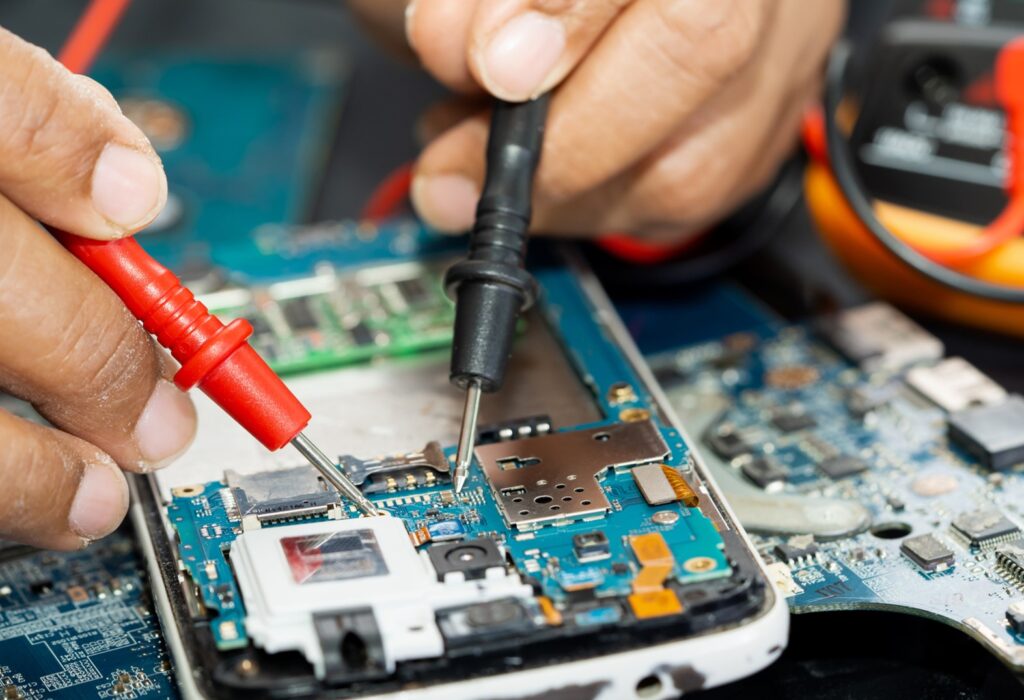
A cellphone repair technician diagnoses and fixes the many problems that phones and tablets develop. The work covers a wide range of repairs:

– Screen replacement — cracked and broken screens, the single most common repair
– Battery replacement — phones that no longer hold charge
– Charging port repair — phones that will not charge or connect
– Water damage repair — cleaning and restoring phones that have gotten wet
– Software issues — phones that freeze, hang, or need reflashing and resetting
– Button and speaker repair — power buttons, volume buttons, earpieces, and loudspeakers
– Camera repair — front and rear cameras that stop working
– Charging and power faults — phones that switch off or drain quickly
– Board-level and microsoldering repair — advanced work on the motherboard itself
– Unlocking and software services — resetting, unlocking, and updating devices
– Tablet repair — the same range of work on tablets
You can start with the common, simpler repairs and grow into the advanced board-level work that earns the most.
Why This Skill is Valuable in Zimbabwe
The demand for cellphone repair in Zimbabwe is enormous and constant, for several clear reasons.

Almost everyone owns a phone. The phone has become essential for communication, banking, business, and daily life. This means the pool of potential customers is nearly the entire population.
Phones break constantly. Screens crack when dropped. Batteries wear out. Charging ports fail. Water gets in. Phones freeze and fault. Every one of these is a customer walking toward a repair technician.
Replacing a phone is expensive. A new phone costs far more than a repair. For most Zimbabweans, fixing the phone they have is the only sensible option when it breaks. This makes repair a necessity rather than a choice.

The work brings daily cash. Cellphone repair pays you on the spot, in cash, every day. Unlike businesses where you wait for payment, a busy repair technician sees money coming in constantly.
The startup cost is low. You can begin with a modest set of tools and a small space, or even work from home and visit customers. Few skills offer such a large market for such a small starting investment.
Repeat and referral business is strong. A customer whose phone you fixed well comes back with the next problem and sends their friends and family. Trust in this business travels fast.

How Much Can You Earn?
Cellphone repair is priced per repair, and because customers are comparing the cost against buying a whole new phone, they are usually willing to pay well to save their device.
Common repairs each carry their own fee: screen replacements, battery replacements, charging port repairs, water damage cleaning, and software fixes all bring in income, with the technician earning both on the labour and on the markup of the parts used. Simpler repairs are quick and steady earners, while advanced board-level and microsoldering repairs command the highest prices because few technicians can do them.
A technician handling several repairs a day earns a solid daily income, and the busier and more skilled you become, the more you earn. Those who master advanced board-level repair, or who grow into a shop with several technicians and a parts-selling business, can earn very well. There is also strong additional income in selling accessories alongside repairs: screen protectors, cases, chargers, cables, earphones, and batteries. Many successful repair technicians earn as much from selling accessories as they do from the repairs themselves.

How to Learn This Skill
1. Formal Training in Zimbabwe
African Christian College
– Course: Cellphone and Tablet Repair Course
– Registration: $30
– Fee: $90 per month
– Duration: 3 months
– Location: 3rd Floor, Morgan House, 27 George Silundika Road, Harare
– Contact: +263 715 219 817
IXAR Academy
– Course: Cellphone and Tablet Repair Course
– Registration: $20
– Fee: $100 per month
– Duration: 3 months
– Location: 1144 Livingstone Avenue, Harare, Zimbabwe
– Contact: +263 78 045 4801
Lindnet Institute of Technology Zimbabwe
– Course: Mobile Phone Repair Short Course
– Registration: $20
– Fee: $100
– Duration: 3 weeks
– Location: Stewart House, 1st Floor, No. 4 Central Avenue, Harare (Opposite MetBank)
– Contact: +263 774 020 715

City Study Centre
– Course: Mobile Phone Repair and Maintenance Course
– Registration: $25
– Fee: $70 per month
– Duration: 2 months
– Location: Along 2nd Street (Sam Nujoma), between Selous Avenue and Livingstone, near NSSA House, next to Credsure, Harare
– Contact: +263 772 404 164 | +263 785 678 269 | +263 713 940 831
2. Apprenticeship — Learn on the Job
One of the best ways to learn is to work alongside an established phone repair technician. Approach a busy repair shop and offer to work with them, even for free at first, in exchange for learning the trade on real devices. You will learn how to diagnose faults quickly, handle delicate parts, deal with customers, and manage the business side. If you need to, work without pay in the early weeks. The hands-on experience of repairing real phones under a skilled technician is worth far more than any wage you would earn in that time.
3. Free Online Courses
You can build strong theory and technique online before or alongside practical training:

Elevify — Cell Phone Repair Course
– URL: https://www.elevify.com/en-us/courses/services-and-repairs/cell-phone-repair
– Free, self-paced, with a certificate. Covers diagnostics, battery and screen replacement, board-level checks, data safety, and customer communication.
Cursa — Mobile Phone Repair Courses
– URL: https://cursa.app/free-courses-mobile-phone-repairs-online
– Free courses from basic to advanced, with free certification via the Cursa app. Also covers how to start a phone repair business.
REWA Academy — Free Cell Phone Repair Training
– URL: https://academy.rewa.tech/courses/free-training-course
– Free training covering diagnosis and repair step by step, including advanced motherboard components, soldering and desoldering, and circuit troubleshooting.

4. Free YouTube Resources
Phone repair is highly visual, so YouTube is one of the most powerful free resources. You can watch a repair on your exact phone model, step by step, as many times as you need:
– Phone repair tutorials: https://www.youtube.com/results?search_query=phone+repair+tutorial
– Phone repair basics: https://www.youtube.com/results?search_query=phone+repair+tutorial+beginner+screen+replacement
– Board-level and microsoldering: https://www.youtube.com/results?search_query=phone+board+repair+microsoldering+beginner
– Water damage repair: https://www.youtube.com/results?search_query=water+damaged+phone+repair+tutorial
– General search for a specific model: search the phone model followed by the repair needed
Tools You Will Need to Get Started
One of the great advantages of this trade is the low cost of entry. You can start with a modest toolkit and add better equipment as you earn.

Basic Starter Kit ($50-$200):
– A precision screwdriver set for phones
– Opening tools, spudgers, and plastic pry tools
– Tweezers
– A suction cup for lifting screens
– A heat source (a heat gun or heating pad) for loosening screens and adhesive
– A multimeter for diagnosing electrical faults
– Adhesive and screen tape
– A magnifying lamp or headset for close work
– An anti-static mat and basic cleaning supplies
As You Grow ($200-$1,000+):
– A soldering iron and hot air rework station for board-level repairs
– A microscope for microsoldering
– A power supply for diagnostics
– Specialised programming and unlocking tools
– A stock of common spare parts and accessories
You do not need everything at once. Start with the basics for common repairs, and reinvest your earnings into the advanced equipment that lets you take on higher-paying board-level work.

How to Find Customers and Grow Your Business
1. Start Where People Already Are
A visible spot with foot traffic — a stall in a busy shopping area, a counter in a phone shop, or a spot near a market — brings customers naturally. People with broken phones are always looking for somewhere convenient to fix them.
2. Use WhatsApp and Facebook
Post photos of repairs you have completed, before and after. Share in community and neighbourhood groups. When someone’s phone breaks, you want to be the name they already know.
3. Offer Fast, Reliable Service
People depend on their phones and hate being without them. A technician who repairs quickly and reliably earns loyal customers and strong word of mouth. Reliability is your best advertisement.
4. Sell Accessories Alongside Repairs
Stock screen protectors, cases, chargers, cables, and earphones. Every customer who comes for a repair is a chance to sell an accessory, adding a second stream of income to every visit.
5. Build Trust Through Honesty
Handle every phone with care, be honest about what can and cannot be fixed, and protect your customers’ devices and data. A reputation for honesty in this business brings a steady flow of referrals.
Where This Business Can Take You
Stage 1: Solo Technician
You start with a basic toolkit, doing common repairs from a small space or as a mobile service, building your skill and customer base.
Stage 2: Established Repair Counter
You secure a visible spot, take on a wider range of repairs, and begin selling accessories alongside your repair work.
Stage 3: Advanced Board-Level Specialist
You invest in soldering and microsoldering equipment and master the advanced board-level repairs that few technicians can do, commanding premium prices.
Stage 4: A Full Repair Shop
You open a proper shop, employ and train other technicians, sell phones and accessories, and handle a high volume of repairs. Some grow into multiple branches or into wholesale parts and accessories supply.
The journey from fixing a cracked screen at a small counter to running a full repair and accessories business is real, and many in Zimbabwe have walked it. It begins with learning to fix the device that almost everyone carries.
Your Path Forward
Phones are everywhere, and phones break every day. As long as people carry them, there will be a constant, never-ending demand for those who can fix them. It is a skill with a huge market, a low cost to enter, daily cash income, and a clear path from beginner to business owner.
Start learning today. Watch the tutorials, take a course, find a technician to learn from, and practise on old and broken phones until you are confident. Begin with the common repairs, build your reputation, reinvest in better tools, and grow. The broken phones are all around you, waiting. Learn to fix them, and you will never be short of customers.
With respect for your ambition,
ZimLedger Admin

ZimLedger
ZimLedger is the all in one business and finance platform for Zimbabwe. It generates quotes, invoices, payslips and financial statements, manages business ledgers, tracks income and expenses, and builds shopping lists. ZimLedger offers a simple yet powerful solution tailored to local needs. Whether you are budgeting in ZiG or USD, managing business accounts, converting Ecocash statements, or tracking household expenses, ZimLedger empowers you to stay organised, make informed financial decisions, and grow your wealth—right from your phone or computer.