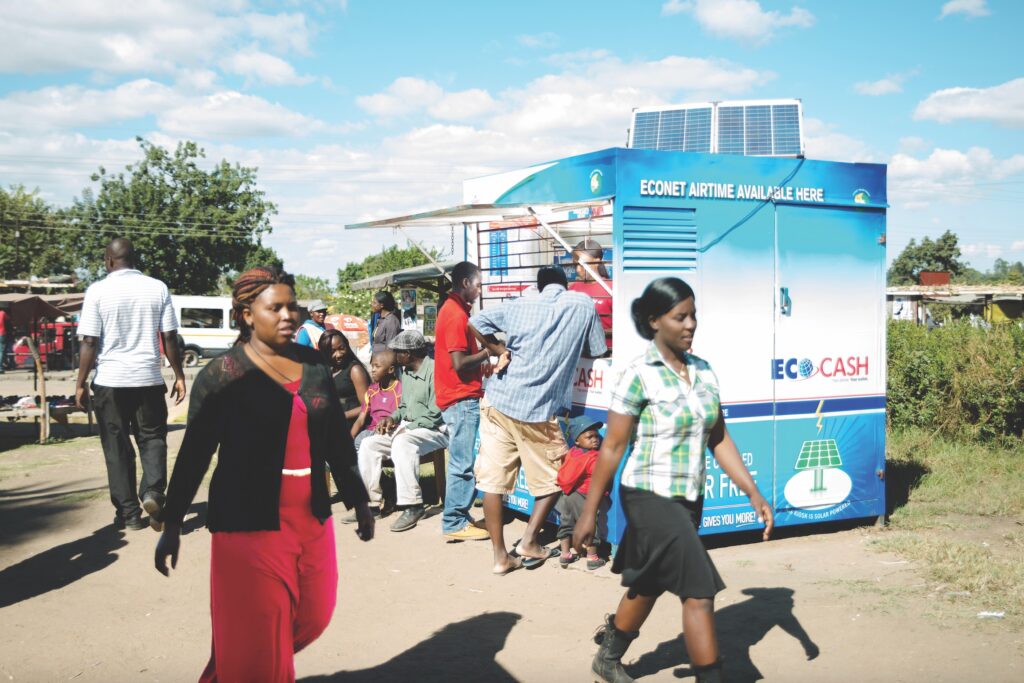
🙏 Thank you to everyone who participated in our EcoCash payment poll. We asked business owners whether they accept EcoCash as a form of payment, and the results reveal important insights about digital payment adoption and pricing practices in Zimbabwe.
Poll Question: For those running businesses in Zimbabwe: Does your business accept EcoCash as a form of payment?
Total votes: 205
Poll Results:
Yes, we accept EcoCash but add extra charges → 128 votes (62.4%)
Yes, we accept EcoCash with no extra charges → 62 votes (30.2%)
No, we do not accept EcoCash → 15 votes (7.3%)

Key Findings:
Digital Payment Adoption is High: An impressive 92.7% of businesses accept EcoCash, showing widespread adoption of mobile money payments in Zimbabwe’s business landscape.
Extra Charges Are the Norm: However, 62.4% of businesses pass on transaction costs to customers through extra charges, making this the dominant payment model rather than the exception.
True Seamless Payment is Low: Only 30.2% of businesses accept EcoCash without adding extra charges, meaning customers face premium pricing for digital convenience in most transactions.

Cash-Only Holdouts Are Minimal: Just 7.3% completely refuse EcoCash, indicating that outright rejection of digital payments is becoming uncommon.
Understanding the Extra Charges Issue:
Why Businesses Add Extra Charges: EcoCash charges approximately 2% when businesses cash out their mobile money. For businesses operating on tight margins, this represents a real cost that directly impacts profitability. Rather than absorb this expense, 62.4% of businesses choose to pass it on to customers who opt for EcoCash payments.
The Business Calculation: From the business perspective, the logic is straightforward – if a customer wants the convenience of paying via EcoCash, they should cover the transaction cost. This is especially true for small businesses where a 2% reduction in margins can mean the difference between profit and loss.

The Misguided “Doing a Favor” Mindset: Some businesses view accepting EcoCash as doing customers a favor, which explains why they feel justified adding charges. However, this perspective is increasingly outdated. In modern commerce, offering multiple convenient payment options is a standard business practice, not a special accommodation. Customers expect payment flexibility as part of normal service.
The Customer Perspective: While businesses have valid reasons for adding charges, customers see it differently. From the previous poll, we know that 13.3% of respondents listed cash-only policies as a major irritation. Extra charges create similar frustration because customers feel penalized for choosing convenient payment methods. They view it as a barrier rather than a reasonable cost recovery.
Business Insights for Entrepreneurs:
The Ideal Position: The best competitive position is to accept EcoCash without extra charges. This creates customer goodwill, removes friction from transactions, and positions your business as customer-friendly. The 30.2% already doing this are likely building stronger customer loyalty.

The Cost-Benefit Reality: Businesses need to weigh the 2% EcoCash fee against potential benefit – increased sales from customers who prefer or only have mobile money. Often, the benefit can outweigh the transaction fees.
Alternative Approaches:
Build Fees into Base Pricing: Instead of visible extra charges, slightly increase base prices and accept all payment methods. Customers strongly prefer inclusive pricing over surprise add-ons.
Cash Flow Benefits: Money received via EcoCash is immediately digital and secure, saving time and costs associated with keeping physical cash.
Strategic Considerations:
Businesses must recognize that payment convenience is evolving from a premium service to a basic customer expectation. While the 2% cost is real and businesses have legitimate reasons to pass it on, this decision has competitive implications. Customers will increasingly choose businesses that make payment easy and affordable.
What This Means:
The results reveal a payment landscape in transition. Most businesses have adopted EcoCash, but the majority still view transaction costs as something customers should bear rather than a normal cost of business operations. This creates tension between business economics and customer expectations.
The 62.4% adding extra charges have understandable reasons – the 2% EcoCash cash-out fee is a real cost. However, they risk losing competitive advantage to the 30.2% who absorb these costs and provide seamless payment experiences.

Key Takeaway:
While businesses have valid economic reasons for adding EcoCash charges, customer expectations are moving toward seamless, no-penalty digital payments. The most successful businesses will find ways to absorb transaction costs as part of their overall pricing strategy rather than itemizing them separately.
The challenge for entrepreneurs is finding the balance between protecting margins and meeting customer expectations. As digital payments become universal, businesses that continue adding visible extra charges may find themselves at a competitive disadvantage, while those who build payment processing into their cost structure position themselves for long-term customer loyalty and growth.

ZimLedger
ZimLedger is the all in one business and finance platform for Zimbabwe. It generates quotes, invoices, payslips and financial statements, manages business ledgers, tracks income and expenses, and builds shopping lists. ZimLedger offers a simple yet powerful solution tailored to local needs. Whether you are budgeting in ZiG or USD, managing business accounts, converting Ecocash statements, or tracking household expenses, ZimLedger empowers you to stay organised, make informed financial decisions, and grow your wealth—right from your phone or computer.