
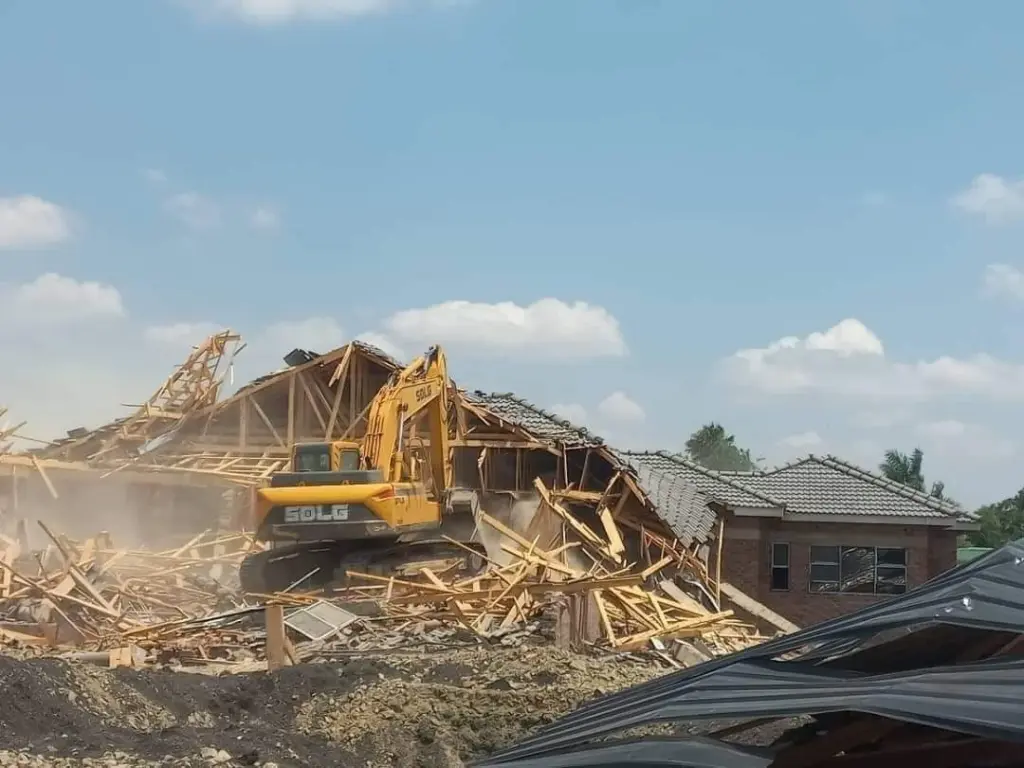
We have all seen the videos.
Grown men wailing. Tears streaming down their faces. Hands on their heads in disbelief. City Council bulldozers crushing their beautiful houses — the houses they saved for, sacrificed for, built brick by brick over years. Reduced to rubble in minutes.
These are not weak men. These are men who worked hard. Who believed they were building a future. Who trusted the wrong people. Who bought cheap land that cost them everything.
If you are reading this and you are excited about a stand that seems too good to be true — stop. This message might save you from becoming the next viral video of a Zimbabwean losing everything.
The Land Baron Epidemic
Zimbabwe has a serious problem with land barons. These are people who sell land they do not own, land that is not approved for development, land that sits on wetlands, or land that belongs to someone else entirely.

They operate with confidence. They show you papers that look official. They take you to sites that look legitimate. They offer prices that seem like a blessing — far below what others are charging. They pressure you to decide quickly before “someone else takes it.”
And thousands of Zimbabweans have fallen for it.
The result? Houses demolished. Life savings lost. Families displaced. Dreams destroyed.

Why Cheap Land Is Expensive
When a stand is priced significantly below market value, there is usually a reason. That reason is rarely good.
The land might be on a wetland — areas where construction is prohibited because they are essential for water drainage and environmental protection. The government has been demolishing structures on wetlands across Harare and other cities. No exceptions. No mercy.
The land might be disputed — claimed by multiple parties, with no clear legal owner. You pay one person, only to discover someone else holds the actual title. Now you have lost your money and have no legal standing to claim anything.

The land might be unapproved — subdivided without proper permits, developed without council authorisation, sold without the legal right to sell. When the authorities catch up, and they always do, your structure comes down.
The land might belong to the state or council — sold illegally by people who have no authority to sell it. You discover too late that you bought something that was never for sale.
In every case, the buyer loses. The land baron disappears. And you are left with nothing but regret and rubble.

The Lucky Ones Still Pay Twice
If you are fortunate — and I use that word loosely — you might not face demolition. Instead, you will be told to “regularise” your stand.
Regularisation means paying again. It means buying the same stand a second time, this time from the correct owner or authority. It means forking out thousands of dollars you already spent once before.
So the cheap stand that cost you $4,000 now costs you $12,000 — or more. Plus legal fees. Plus stress. Plus months or years of uncertainty while your case is processed.

Cheap is expensive. Always.
The Documents You Must Demand
Before you pay a single dollar for any stand in Zimbabwe, you must verify the following documents. No exceptions. No shortcuts. No trusting the seller’s word.
1. Title Deed or Valid Offer Letter
For private land, demand to see the title deed. This document proves legal ownership and can be verified at the Deeds Office for a small fee.

For government or council land, demand the offer letter or allocation letter, plus the agreement of sale between the government or council and the seller. The offer letter must be in the seller’s name.
If someone holds an offer letter from the Ministry of Lands for agricultural land, be very suspicious. Agricultural land is not supposed to be sold by individuals, and changing it to residential use requires permits that most sellers do not have.
2. Subdivision Permit
If the land was originally a larger piece that has been divided into stands, the developer must have a subdivision permit from the local authority. This permit confirms the land is legally approved for division into residential plots.

Without this permit, the subdivision is illegal. Your stand does not officially exist.
3. Dispensation Certificate
This document is issued by the Surveyor General’s Office. It confirms that the land has been properly surveyed and the subdivision is approved at the national level.
4. Approved Layout Plans
For council or state land, layout plans must be approved by the Department of Physical Planning. These plans show the roads, drainage, sewer lines, and plot arrangements for the development.

5. Approved Engineering Designs
The council’s Engineering Department must approve designs for water, sewer, and road infrastructure. Without these approvals, the development cannot legally proceed.
6. Certificate of Compliance
This is the most important document. It is issued by the local council after all conditions have been met — infrastructure is in place, all permits are approved, and the development meets council standards.
A Certificate of Compliance means the stand is fully legal and ready for you to build on. Without it, you are taking a risk.

How to Verify Everything
Do not take the seller’s word for any document. Verify independently.
Visit the Deeds Office. Visit the deeds office and confirm that the title deed is real and that the person selling is actually the owner.
Visit your local council. Take the documents the seller has given you and ask the council to verify them. Ask specifically about the subdivision permit, layout plans, and Certificate of Compliance.

Visit the Surveyor General’s Office. Confirm the dispensation certificate is legitimate.
Do not use contacts provided by the developer. Developers will give you phone numbers of “council officials” who will confirm everything is fine. These might be fake contacts. Find the council offices yourself. Visit in person. Make your own enquiries.
If the seller becomes hostile when you ask for documents or time to verify, that tells you everything you need to know. A legitimate seller will welcome your due diligence. A fraudster will pressure you to pay quickly before you discover the truth.
Hire a Lawyer
If you can afford it, hire a property lawyer before you sign anything.
A lawyer can review all the documents. A lawyer can conduct searches at the Deeds Office on your behalf. A lawyer can identify red flags you might miss. A lawyer can protect you from contracts designed to trap you.
Yes, it costs money. But it costs far less than losing your entire investment to a land baron.
Deal With Reputable Agents
Not all property agents are trustworthy, but registered estate agents have reputations to protect. They are regulated. They can be held accountable.
Ask for the agent’s registration. Check their track record. Look for reviews or testimonials. Ask around in your community — people talk about agents who have helped them and agents who have cheated them.
Avoid buying stands from random people on social media or WhatsApp groups. Avoid developers you have never heard of who suddenly appear with amazing deals. If you cannot verify who you are dealing with, do not deal with them.
Visit the Site — Multiple Times
Before buying, visit the stand yourself. Do not rely on photos or videos.
Look at the surrounding area. Is there infrastructure — roads, water, electricity connections? Or is it just empty land with no development in sight?
Talk to neighbours if there are any. Ask them about the development. Ask if they have had any problems. Ask how long they have been waiting for services.
Visit at different times — morning, evening, rainy season. Some land floods. Some land is inaccessible during rains. Some land looks fine in photos but is clearly problematic when you see it in person.
The Questions to Ask
Before you pay, ask the seller these questions directly:
Who is the original owner of this land? Can I see the parent title deed?
Has the subdivision been approved? Can I see the subdivision permit?
Has the council issued a Certificate of Compliance? If not, what is still pending?
What infrastructure is in place? Water? Sewer? Roads? Electricity?
Are there any disputes or claims on this land?
Can I take these documents to the council and Deeds Office to verify before I pay?
Watch their reaction. Honest sellers answer these questions openly. Dishonest sellers become evasive, aggressive, or start pressuring you to pay immediately.
The Cost of Ignoring This Advice
Some people in those demolition videos ignored this advice. They saw a cheap price. They trusted the seller. They did not verify documents. They did not visit the council. They did not hire a lawyer.
And now they have nothing.
Some of them had finished houses — plastered, painted, furnished. Some had moved their families in. Some had been living there for years before the demolition order came.
It did not matter. The bulldozers do not care how much you spent. The law does not care how long you have been there. If the land is illegal, your structure comes down.
Your Dream Deserves Protection
Owning a stand is a dream for many Zimbabweans. Building a house is the achievement of a lifetime. That dream deserves to be protected — not gambled on cheap land from unknown sellers.
Take your time. Do your research. Verify everything. Pay for professional help if you need it. Deal with people you can trust.
Yes, proper stands cost more. Yes, the process takes longer. Yes, it requires patience.
But when you finally build your house on land that is fully legal, fully approved, and fully yours — you will sleep peacefully knowing no bulldozer is coming.
That peace of mind is worth every extra dollar and every extra day of due diligence.
Do not let the cheap land cost you everything.
With respect for your dreams and your hard-earned money,
ZimLedger Admin

ZimLedger
ZimLedger is the all in one business and finance platform for Zimbabwe. It generates quotes, invoices, payslips and financial statements, manages business ledgers, tracks income and expenses, and builds shopping lists. ZimLedger offers a simple yet powerful solution tailored to local needs. Whether you are budgeting in ZiG or USD, managing business accounts, converting Ecocash statements, or tracking household expenses, ZimLedger empowers you to stay organised, make informed financial decisions, and grow your wealth—right from your phone or computer.