An Open Letter to Zimbabwean Youth and Aspiring Entrepreneurs
Skills Series – Part 9 (Some have built houses from this business – hadzisi ngano.)
Dear Entrepreneur,
This is Part 9 of our Skills Series — a collection of articles showing you practical skills you can learn and turn into income. Today we cover solar installation.
Zimbabwe has a power crisis. Load shedding has been a reality for years. Businesses, homes, schools, and hospitals are all looking for alternatives. And the answer, increasingly, is solar.
This means one thing for the person willing to learn: the demand for skilled solar installers in Zimbabwe is enormous — and it is growing every single year.

You do not need a university degree to enter this industry. You need practical skills, the right training, and the confidence to get started.
What Does a Solar Installer Do?
A solar installer designs, supplies, and installs solar power systems. The work covers several areas:
Residential Solar:
– Assessing a home’s power needs
– Designing a solar system to match those needs
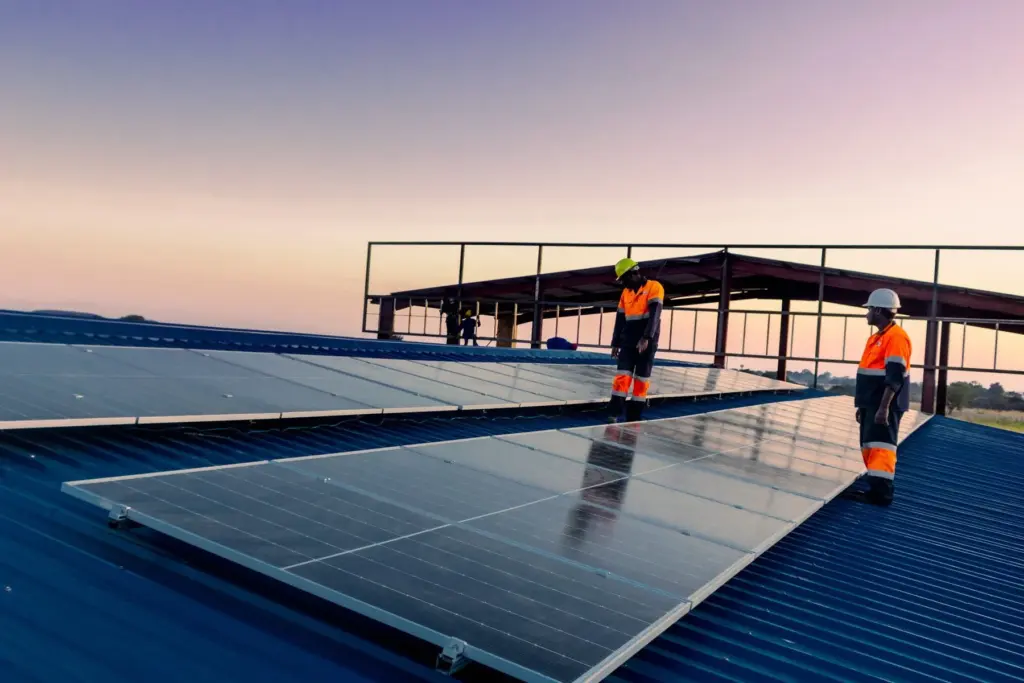
– Installing solar panels on rooftops or on ground mounts
– Installing inverters, charge controllers, and battery banks
– Wiring all components together safely
– Commissioning and testing the system
– Maintenance and fault-finding on existing systems

Commercial and Industrial Solar:
– Larger systems for offices, shops, factories, and farms
– Grid-tied systems (connected to ZESA as backup)
– Off-grid systems (fully independent from ZESA)
– Hybrid systems (solar with battery backup and grid connection)
– Three-phase systems for heavy industrial loads
After-Sales Services:
– Battery maintenance and replacement
– Panel cleaning and inspection
– Inverter repair and replacement
– System upgrades and expansions
– Fault diagnosis and troubleshooting
Why This Skill is Valuable in Zimbabwe
The answer is simple: ZESA cannot supply reliable power, and Zimbabwe’s population still needs electricity.

Every household wants consistent lighting, refrigeration, and the ability to charge devices. Every business needs power to operate. Every school needs electricity to function. Every clinic needs power to store medicine and run equipment.
Solar is no longer a luxury in Zimbabwe. It is a necessity. And someone has to install all of these systems.
The residential market is massive. Thousands of homeowners in Harare, Bulawayo, and every other town are installing solar systems. Many more want to but have not yet found an installer they trust.

The commercial market pays more. Businesses need larger, more complex systems — and they pay accordingly. A commercial solar installation that takes a week to complete can generate significant income for the installer.
New residential areas are off the grid. New residential developments and many other newer suburbs on the outskirts of Harare and other cities are either not yet connected to the ZESA grid or have unreliable connections. Residents in these areas have no choice but to turn to solar for their basic power needs. This is an entirely captive market.
Rural Zimbabwe runs on solar or nothing. The vast majority of Zimbabwe’s rural population — in Mashonaland, Manicaland, Matabeleland, Midlands, and Masvingo — has no ZESA connection and no prospect of one in the near future. Schools, clinics, churches, grinding mills, small shops, and homesteads all need power. Solar is the only realistic solution. The installer who is willing to travel and serve these communities will find an enormous and largely unserved market.

The agricultural sector is growing. Farmers are powering irrigation pumps, cold rooms, tobacco curing barns, and poultry houses with solar. This market is largely untapped.
Load shedding is not ending soon. As long as Zimbabwe’s power grid remains unreliable, the demand for solar installation will continue to grow.
People upgrade regularly. A homeowner who installed a small system two years ago now wants a bigger one. Batteries that were installed five years ago need replacing. Old inverters fail and need upgrading. There is repeat business built into this industry.

How to Learn This Skill
1. Formal Training in Zimbabwe
Several institutions in Zimbabwe offer solar installation training at affordable prices:
Green Solar Academy Zimbabwe
– Course: Solar Theory Basics
– Fee: $50 per day
– Location: 17235 Eland Close, Harare, Zimbabwe
– Contact: +263 8677 211432 | +263 786 802 495
Harare Institute of Technology
– Course: Solar Photovoltaic Systems Level 1 Training
– Fee: $200
– Location: Ganges Road, Belvedere, Harare, Zimbabwe
– Contact (Call): +263 718 792 518 | (WhatsApp): +263 719 655 258

Sun Harvest Solar Technology
– Course: Advanced Certificate in PV Solar Installation
– Duration: 13 weeks
– Registration: $30
– Tuition: $120 per month
– Total Cost: $440
– Location: Corner Julius Nyerere and Nelson Mandela, Zimpost Building, 2nd Floor, Room 29, Harare
– Contact: +263 78 319 4410
Jude Solar Academy
– Course: Solar Installation Course
– Full Course Fee: $150
– Duration: 7+ days
– Location: Shop B2, Merchant Mall, Corner Robson Manyika and Second Street, Harare
– Contact (WhatsApp or Call): +263 716 578 708 | (Calls Only): +263 777 488 943
IXAR Academy
– Course: Solar Installation Course
– Registration: $20
– Fee: $100 per month
– Duration: 2 months
– Total Cost: $220
– Location: 1144 Livingstone Avenue, Harare, Zimbabwe
– Contact: +263 780 454 801 | +263 78 632 9089
– Accredited by the Ministry of Higher and Tertiary Education, Innovation, Science and Technology Development

Ex-Africa Technical Institute
– Course: Solar Installation Training
– Duration: 5 days
– Fee: $130
– Location: 51 Jason Moyo Avenue, Globe House, 4th Floor, Harare
– Contact: +263 788 089 373 | +263 787 290 213
TGS College
– Course: Solar Installation Course
– Duration: 3 months
– Fee: $250 once off or $100 per month
– Location: 23 Third Street, Harare
– Contact: +263 78 948 0800
Quandaline Institute of Engineering
– Course: Solar Installation Course
– Duration: 1 month
– Fee: $280
– Location: 15 Mull Road, Belvedere, Harare, Zimbabwe
– Contact: +263 78 788 1072

PFN Solar Academy
– Course: Practical Solar PV Installers Course
– Duration: 3 days
– Fee: $100
– Contact: +263 780 275 202 | +263 78 868 9719
– Locations:
– Office 10, Coronet Court, 109 Nelson Mandela, Harare
– 17 Lancaster Avenue, Behind VID, Belvedere, Harare
– Shop 2, Autoquip Building, Corner Fife Street and 12th Avenue, Bulawayo
– 1436 Elliot Shopping Centre, Next to N Richards, Beitbridge
– 805B Mike’s Auto Complex, Robert Mugabe Way, Zvishavane
ZESA National Training Centre
– Course: Solar and Grid Training
– Fee: $450
– Location: 25 Samora Machel Avenue, Harare
ZESA’s course is the most expensive but carries significant weight in the industry given that ZESA is Zimbabwe’s national electricity authority.

2. Apprenticeship with a Solar Company
Find a solar installation company and offer to work with them as an assistant. You carry equipment, observe installations, and gradually take on more responsibility.
Many solar companies in Zimbabwe are small operations — a lead installer and one or two assistants. Approach them directly. Some will pay you a small wage from the start. Others may require you to work for free initially in exchange for training. If you can afford to work for free for 2-3 months, the practical experience you gain is worth far more than any classroom course alone.
Look for companies that do both residential and commercial work — you will learn a wider range of systems.
3. Free Online Courses
You can build a strong theoretical foundation online before or alongside your practical training:
Solar Energy International (SEI) — RE100: Introduction to Renewable Energy
– URL: https://solarenergytraining.org
– Completely free. Covers solar, wind, and water energy fundamentals. The best starting point for someone with no background in solar.
– SEI has trained over 100,000 people since 1991 and is considered the world’s leading renewable energy technical training provider.
Alison — Free Solar Energy Courses
– URL: https://alison.com/tag/solar-energy
– Fully free. Covers photovoltaics, solar power stations, solar heating systems, and commercial solar use. A certificate is available upon completion.
Coursera — Solar Energy Basics (Duke University)
– URL: https://www.coursera.org/courses?query=solar+energy
– Free to audit. Covers PV systems, system design, installation techniques, site assessment, energy storage, and grid integration.
SkillCat — Free Solar Installation Training
– URL: https://www.skillcatapp.com/solar-installation-training
– Free and mobile-friendly. Includes 3D interactive simulations covering solar panel placement, wiring, maintenance, and tools. Designed specifically for solar installers.
Class Central — Solar Energy Course Directory
– URL: https://www.classcentral.com/subject/solar
– Aggregates free and paid solar courses from Udemy, edX, Coursera, and other platforms. Good for comparing what is available.
4. Free YouTube Channels
DIY Solar Power with Will Prowse (https://www.youtube.com/@WillProwse)
– Highly recommended for off-grid systems. Step-by-step tutorials, product reviews, battery systems, and inverters. Designed for beginners with no prior experience.
Engineer775 (https://www.youtube.com/@engineer775)
– Covers full installations from ground mounting through wiring, trenching, and testing. Very thorough and practical.
DavidPoz Energy (https://www.youtube.com/@DavidPozEnergy)
– Focuses on battery systems and off-grid setups. Very practical for someone building systems from scratch.
UnpluggedTexan (https://www.youtube.com/@unpluggedtexan)
– Detailed explanations of wiring decisions and installation logic. Good for understanding the “why” behind each step.
General YouTube Search (https://www.youtube.com/results?search_query=solar+installation+tutorial+beginner)
– Search for specific topics: off-grid solar wiring, inverter installation, battery bank setup, panel mounting, and more.
Tools and Equipment You Will Need
As a solar installer, your employer or client typically supplies the system components. What you need are the tools to install them:
Basic Solar Installer Toolkit ($100-$300):
– Multimeter (for testing voltage, current, and continuity)
– Crimping tool and cable lugs
– Wire strippers and cutters
– Screwdrivers (flat and Phillips, various sizes)
– Drill and drill bits
– Spanner set and socket set
– Pliers and long-nose pliers
– Cable ties and conduit clips
– Measuring tape and spirit level
– Safety gloves and safety glasses
– Roof safety harness (for rooftop installations)
As You Grow ($300-$1,000+):
– Clamp meter (for measuring current without breaking the circuit)
– Solar panel tester
– Battery load tester
– Thermal camera (for identifying hot spots and loose connections)
– Professional cable management tools
You do not need to own everything from day one. Start with the basics and invest in better tools as you earn.
How Much Can You Earn?
Solar installation in Zimbabwe is well-paid because it requires specialised knowledge and carries responsibility — a poorly installed system can damage expensive equipment or create fire hazards.
Residential Systems:
– Small system: $50-$150 installation fee
– Medium system: $150-$400 installation fee
– Large system: $400-$1,000+ installation fee
Commercial Systems:
– Small commercial (office or shop): $500-$2,000 installation fee
– Medium commercial (factory or warehouse): $2,000-$10,000+ installation fee
Maintenance and Service Calls:
– Fault diagnosis: $20-$50
– Battery replacement (labour): $30-$80
– Inverter repair (labour): $50-$150
– System audit and health check: $30-$70
A solar installer handling 2-3 residential jobs per week can earn $500-$1,500 per month. An installer who moves into commercial work and builds a team can earn significantly more.
As you gain experience and reputation, you can stop working for others and start your own solar company — supplying and installing complete systems.
How to Get Started
Step 1: Build Your Foundation
Start with the free online courses. Understand how solar panels, inverters, charge controllers, and batteries work together before you touch a real system.
Step 2: Get Formal Training
Enrol in one of the Zimbabwe institutions listed above. Even a short course gives you hands-on experience and a certificate to show clients.
Step 3: Find an Apprenticeship
After or alongside your formal training, work with an established solar company. Real jobs teach you things no classroom can — rooftop safety, cable management, client communication, and troubleshooting under pressure.
Step 4: Start Small
Take on small residential jobs first. A single panel and inverter for a neighbour. A basic lighting system for a small shop. Build your confidence and your portfolio.
Step 5: Document Your Work
Take photos of every installation you complete. Build a portfolio. Clients want to see what you have done before they trust you with their expensive solar equipment.
Step 6: Build Your Reputation
Word of mouth drives this business. Do neat, safe, professional work. Follow up with clients after installation. Fix problems promptly. One happy client will send you three more.
How to Market Your Solar Installation Business
Having the skill is only half the job. You also need customers. Here is how to build a client base and grow your business from zero:
1. Start With People You Know
Your first customers will almost always come from your personal network. Tell every person you know that you install solar systems. Family, friends, former colleagues, church members, neighbours. Do not be shy about it. Word of mouth is the most powerful marketing tool you will ever have, and it costs nothing.
Offer your first few installations at a reduced rate in exchange for referrals and testimonials. A satisfied customer who talks to 10 people is worth more than any advertisement.
2. Build a Portfolio From Day One
Take clear, professional photographs of every system you install. Before and after. The panels on the roof. The battery bank. The inverter board. The neat cable management. A well-documented installation builds trust faster than words ever will.
Create a WhatsApp folder of your work. When a potential client asks what you have done, you can show them immediately.
3. Use WhatsApp Actively
WhatsApp is Zimbabwe’s most powerful business tool. Create a business profile. Post photos of completed installations regularly. Post tips about solar — how to maintain batteries, how to know if your inverter is healthy, what causes panels to underperform.
Share your content in community groups, neighbourhood groups, and church groups. Do not spam — contribute value. When people need a solar installer, they will remember the person who was consistently sharing useful information.
4. Create a Facebook Page
Facebook remains widely used in Zimbabwe, particularly among homeowners and business decision-makers. Create a page for your solar business. Post installation photos, client testimonials, and educational content.
Paid Facebook advertising is relatively affordable and allows you to target people in specific areas.
5. Register on Google
Create a free Google Business Profile at https://business.google.com. When someone in Harare searches “solar installer near me” or “solar installation Harare,” your business can appear in the results.
This is free and one of the most valuable things you can do for a local service business. Include your phone number, location, photos of your work, and your services.
6. Target New Residential Developments
New suburbs being built around Harare, Bulawayo, and other cities are full of homeowners who need solar because the ZESA grid has not yet reached them. These are motivated buyers — they are not choosing solar, they need it.
Visit show houses, talk to estate agents, and put up notices in residential areas. Offer free consultations. Once you install one system in a new development, neighbours will see your work and come to you.
7. Partner With Hardware Shops and Electricians
Hardware shops that sell solar panels, inverters, and batteries often get asked by customers: “Can you recommend someone to install this?” Position yourself as the installer they refer.
Visit hardware shops near you and introduce yourself. Leave your contact details. Offer them a small referral fee for every client they send your way. This creates a passive pipeline of leads.
Electricians who do not specialise in solar often get asked solar questions. Build relationships with them. They can refer solar jobs to you, and you can refer general electrical work back to them.
8. Offer a Maintenance Package
One-time installations are good. Recurring income is better.
Offer clients a maintenance package — a visit every 6 months to check the system, clean the panels, test battery health, and verify all connections. Charge a flat fee for this service.
This keeps you connected to your existing clients, generates regular income, and positions you as the person they call first when they want to upgrade or expand their system.
9. Ask for Reviews and Referrals
After every successful installation, ask your client directly: “Do you know anyone else who needs solar?” Most satisfied clients are happy to refer you — they just need to be asked.
Also ask them to send you a voice note or text message saying what they thought of your work. These testimonials are powerful when shared on WhatsApp and Facebook.
10. Grow Into Commercial Work
Residential work builds your foundation. Commercial work builds your income.
Once you have a track record of residential installations, approach small businesses — shops, offices, clinics, schools, churches. They have larger budgets, larger systems, and often become long-term clients as their power needs grow.
A single commercial installation can pay more than 5 residential jobs. And commercial clients tend to refer other commercial clients.
Zimbabwe’s power situation is not changing overnight. Load shedding will continue. And every year that passes, more homes, businesses, farms, and institutions will turn to solar.
The installer who is trained, reliable, and professional will never run out of work.
This skill has no ceiling. You can start as a one-person operation and grow into a full solar company with a team of installers, a supply chain, and commercial contracts. The path from trainee to business owner is clear — and the demand is there to support every step of that journey.
Start learning today. The sun rises every morning. Make sure you are ready to harness it.
With respect for your ambition,
ZimLedger Admin

ZimLedger
ZimLedger is the all in one business and finance platform for Zimbabwe. It generates quotes, invoices, payslips and financial statements, manages business ledgers, tracks income and expenses, and builds shopping lists. ZimLedger offers a simple yet powerful solution tailored to local needs. Whether you are budgeting in ZiG or USD, managing business accounts, converting Ecocash statements, or tracking household expenses, ZimLedger empowers you to stay organised, make informed financial decisions, and grow your wealth—right from your phone or computer.