The Goal — What Does Financial Independence Actually Mean?
Dear Future Millionaire,
We recently asked our WhatsApp Channel community a simple question:
“Would you rather be given US$100,000 now, or wait to be given US$2 million 5 years from now?”
The results were striking. Out of 325 votes, 69% chose to take the $100,000 now. Only 31% were willing to wait 5 years for the $2 million.
In Part 1, we discussed delayed gratification. In Part 2, we discussed the time value of money. In Part 3, we discussed personal financial strategy — how to handle the money you are getting right now.
Now we come to the final question: Why? Why are we doing all of this? What is the goal?
Why Are You In Business?
Why are you in business? What is the goal?
Is it developing your country? Feeling fulfilled? Doing something you love? Serving a need in the community? Creating employment? Helping the needy?

These are all noble reasons. But let us be honest.
The $100,000 / $2 million question reveals what we really want. When we think about receiving a large sum of money, our minds fill with excitement. We start imagining what we could do with it. We dream of houses, cars, businesses, investments, freedom.
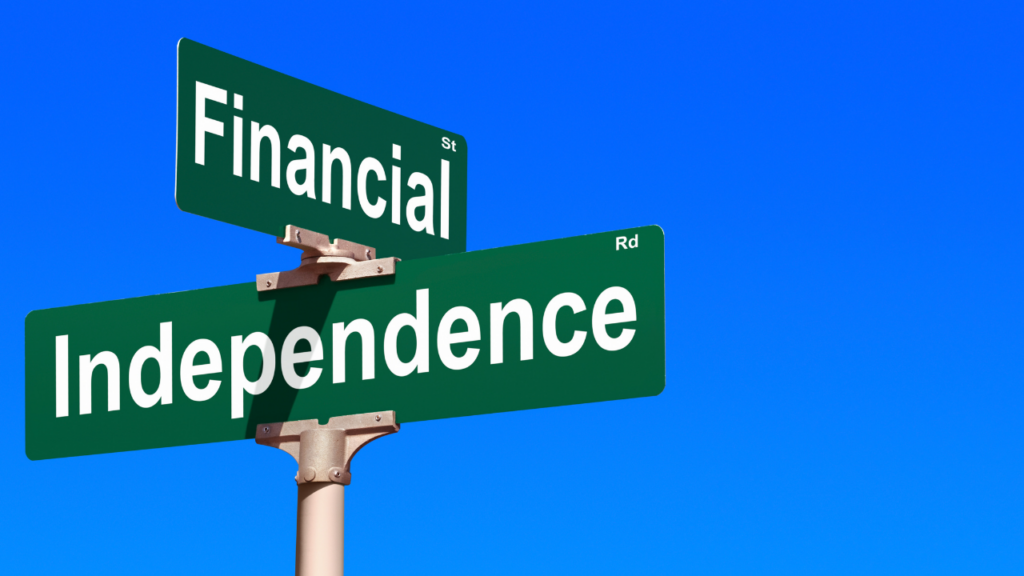
The goal is not just money. The goal is to be wealthy. To be financially independent. That is what every entrepreneur strives to achieve, whether they admit it openly or not.
Money cannot buy happiness. But poverty cannot buy happiness either. What money can buy is freedom.
What Does It Mean To Be Wealthy?
There are many definitions of wealth. Let me be specific about what I mean.
Being wealthy means having the ability to live for a long time — ideally the rest of your life — without doing any kind of work, while maintaining the lifestyle you want and covering all your expenses for yourself and your household.
Read that again.
You will no longer be working for money. Money will be working for you. You will be receiving income without trading your time for it. This is the true definition of financial independence.
The longer you can live in that state, the wealthier you are.
How is this possible? Consider someone like Strive Masiyiwa. If he decided to retire today, he could live the rest of his life exactly as he wants, without ever working again. Why? Because he has businesses and investments that constantly bring money into his pockets. He can sell shares if needed to fund his lifestyle. He is wealthy.
Now ask yourself: If you were to stop working today, would you be able to live the lifestyle you want, covering all your expenses, for the rest of your life?
If the answer is no, then you are not yet there. And that is fine — most people are not. But now you know what the goal is.
Your Business Should Operate Without You
Here is a key insight that separates business owners from the truly wealthy: your business should be able to operate independently of you.
If you have a business that requires you to be present every day, making every decision, serving every customer, you do not have a business. You have a job. You have simply created employment for yourself.
A real business generates enough revenue to hire people who run the business on your behalf. Tinashe Mutarisi, the owner of Nash Paints and Nash Furnishers, does not have to be involved in daily operations at every branch because the businesses can operate independently of him. He can travel for a month and the businesses continue. He can fall sick for a week and the businesses continue. Being part of the business becomes a choice, not a requirement.

This is the true definition of wealth and financial independence. Your income is not dependent on your daily labour.
It Is Not About The Amount
Let me address a common misconception.
If I have $20 million in my account and no business, am I wealthy? It depends. If that $20 million can sustain me for all my life, living the life I want without having to work again, then yes, I am wealthy.
If I am an executive in a big company earning $20,000 per month, am I wealthy? It depends. If I were to lose my job immediately but still be able to maintain my lifestyle without working again, then yes, I am wealthy. But if I depend on my job to cover my expenses, then I am not wealthy. I am well-paid, but I am not free.
Does this mean you need millions of dollars to achieve the goal of being wealthy? No.
It is not about the amount of money. It is about the time you can live the life you are content with, without ever working.
If you are content with a simple lifestyle, and you have a business that operates independently of you, generating $1,000 in monthly profits — or houses that provide monthly rentals — and that is enough to cover all your expenses, then you are wealthy. You do not need millions of dollars. You need income-generating assets that exceed your expenses.
Remember Part 3: real assets versus pseudo-assets. A rental property that pays you $500 per month is more valuable than a vacant stand worth $60,000 that generates nothing.
The Freedom That Money Buys
When you achieve financial independence, something shifts.

You do not see the difference between a Monday and a Saturday. Every day is yours to use as you choose.
You can spend a week in the Vumba Mountains or at Victoria Falls, and your income is not affected.
You can see poor street kids in Harare and instead of saying “Shame,” you can actually transform their lives.
You can put smiles on many families because the breadwinners of those families are employed by your company.
You can drive the car you want and go on holiday whenever you want.
You can drill boreholes in your village to provide clean water. You can send orphans to school. You can empower unemployed youths in your community.
Money gives you the freedom to do what you want. That is the goal.
Does achieving wealth mean you should stop working? No. But working becomes a choice. Whether you work or you do not, you will still have enough income to live the life you want. That is freedom.
Why Many Will Never Reach The Goal
The saddening reality is that many people will never reach this state. Let me tell you the biggest reasons why.
The Capital Fallacy
The biggest excuse is insufficient capital. “I do not have enough capital to start a business.”
Here is what I have observed. If you ask an unemployed person, they will tell you that they just need $1,500 capital and they will reach the stars. If you ask someone earning $1,500 per month, they will tell you that $1,500 is not enough to start anything — they need $20,000 to reach the stars.
I call this the capital fallacy.
“Enough” capital is neither a necessary nor a sufficient condition to acquire wealth. Yes, capital makes things easier. But its absence does not make wealth impossible.
Some people started by selling freezits with almost no capital. Others started by selling airtime. Others did manual work, freelance jobs, and grew their businesses over time. Lack of money or a bad economy cannot stop a determined person from making money. It will take more time, yes. But it can be done.
The problem is that once we believe “no capital = no business,” our minds completely shut down. We end up missing many opportunities. We do not start anything because we do not want to leave our comfort zone.
We do not want to be seen selling mineral water at bus stations because we think it is shameful.
We do not want to learn carpentry, welding, tiling, painting, or building because we have “university degrees.”
We want to be spoon-fed. We want someone to tell us “do ABC and you will get money without too much effort or risk.” That person does not exist. That opportunity does not exist.
The Comfort Zone
Many people are comfortable with their salaries. They complain about their jobs, but they are not uncomfortable enough to take action. They will spend 30 years working for someone else, retire with a small pension, and wonder where the time went.
The comfort zone is the enemy of financial independence.
Fear of Starting Small
We discussed this in Part 2. As capital increases, percentage returns tend to decline. This means small capital can actually generate higher percentage returns than large capital — if you are willing to hustle.
But people do not want to start small. They want to start with a shop, a car, an office. They want to look like a business owner before they have built a business.
Take a step of faith and start something. Be in the field. Your eyes will open. You will see opportunities you never thought of. You have to start somewhere.
The Internet Has Changed Everything
The internet has opened opportunities to make money with very little capital.
You can learn programming and build websites for businesses. There are many Zimbabwean companies without websites. You can learn to code for free on YouTube and through online courses.
You can offer freelance services — writing, design, data entry, virtual assistance.
You can start a blog or a YouTube channel and build an audience.
You can learn digital marketing and help businesses reach customers online.
You can sell products through social media and WhatsApp.
Is this easy? No. But it can be done. The tools are available to anyone with a phone and internet access.
The Questions That Matter
As we close this series, I want you to ask yourself some hard questions.
Do you think you cannot be wealthy because you have no job? No capital? No political connections? No rich family and friends?
Do you think you cannot make money because the economy of Zimbabwe is difficult?
Do you think financial independence is only for Europeans and Americans?
Do you think what I have described in this article is not practical for Africans like us?
If you think these things, then continue thinking like that. The goal will remain a dream for you.
But if you are willing to challenge these beliefs — if you are willing to start small, delay gratification, put your money to work, build real assets, and persist through difficulties — then the goal is achievable.
It will not be easy. It will not be fast. But it can be done.
Use The Right Tools
As you pursue financial independence, use tools that help you track your progress.
ZimLedger’s Business Ledger helps you track your business income and expenses, so you know exactly how much profit your business is generating.
ZimLedger’s Personal Ledger helps you track your personal finances, so you can monitor your savings rate and progress towards your goals.
ZimLedger’s Customer Ledger helps you track what customers owe you, so you can collect your money faster and improve your cash flow.
The goal is clear. The tools are available. The only question is: are you ready to start?
This concludes The US$100,000 / 2 Million Dollar Lessons series.
With respect for your ambition,
ZimLedger Admin

ZimLedger
ZimLedger is the all in one business and finance platform for Zimbabwe. It generates quotes, invoices, payslips and financial statements, manages business ledgers, tracks income and expenses, and builds shopping lists. ZimLedger offers a simple yet powerful solution tailored to local needs. Whether you are budgeting in ZiG or USD, managing business accounts, converting Ecocash statements, or tracking household expenses, ZimLedger empowers you to stay organised, make informed financial decisions, and grow your wealth—right from your phone or computer.