
The Business That Every Company Needs
Think about every business you have walked into this week. The security guard at the gate. The bank teller behind the counter. The construction workers on the building site. The nurses at the clinic. The waiters at the restaurant. The mechanics at the garage.
Every single one of them is wearing a uniform.
Now multiply that by the thousands of companies, schools, hospitals, construction firms, mining operations, government departments, security companies, and NGOs operating across Zimbabwe. Every one of them needs workwear — and they need it repeatedly. Uniforms wear out. Staff numbers grow. New employees join. Companies rebrand.
This is a business built on institutional demand. Unlike selling to individuals, when you sell workwear to a company, you are not making a single sale — you are opening a relationship that generates repeat orders for years. One mining company can order 500 overalls at a time. One school can order 200 uniforms per term. One construction firm can keep you busy for an entire year.
The workwear and corporate uniforms business in Zimbabwe is large, underserved in many areas, and very profitable for those who position themselves correctly.

Why Workwear Works in Zimbabwe
The workwear market operates on bulk orders and repeat business. A single corporate client can be worth more than 100 individual customers. And once you have established a supplier relationship with a company, they rarely change suppliers unless you give them a reason to.
Here is why this business works:
– Bulk orders: One company order can be worth $500 to $5,000 at a time
– Repeat business: Companies reorder uniforms every season, year, or whenever staff numbers grow
– Multiple sectors: Construction, mining, healthcare, schools, hospitality, security, corporate offices — everyone needs uniforms
– High margins: A worksuit bought for $8 can sell branded and finished for $20 or more
– Branding demand: Companies want their logos on everything — shirts, overalls, caps, and jackets
– Low competition: Many areas and sectors in Zimbabwe are underserved by quality workwear suppliers
– Recession-resistant: Even in tough economic times, companies still need to dress their staff
Real Market Prices in Zimbabwe
Here is what workwear businesses are currently charging in the Zimbabwean market:

Worksuits and Overalls
– Basic worksuit (royal or navy blue): $12
– Standard worksuit: $15 – $20
– Premium worksuit (Paramount brand): $35
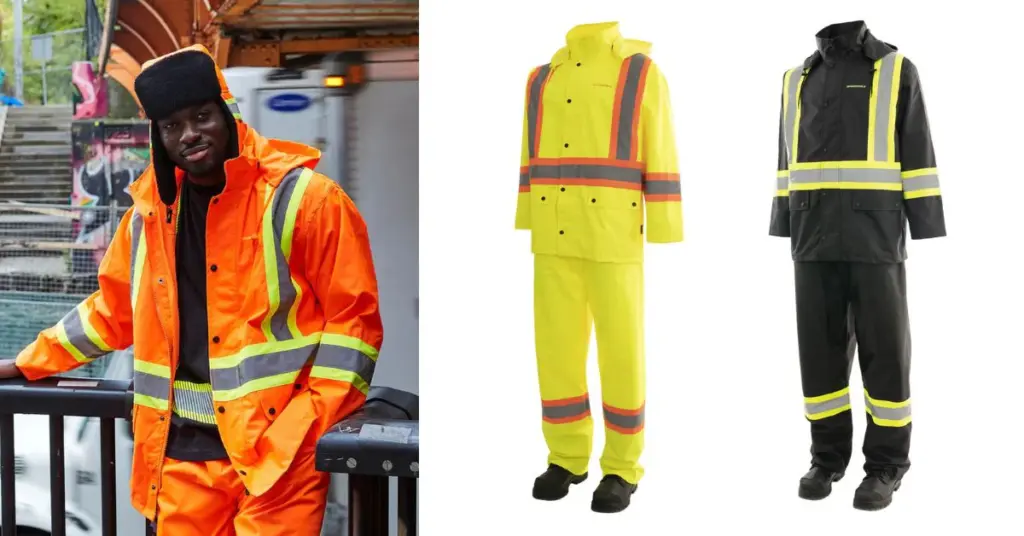
– Hi-visibility (reflective) worksuit: $20 – $35
– Mining and industrial overalls: $25 – $45
– Flame retardant overalls: $50 – $80
Safety Footwear
– Fashion safety shoes (basic): $30
– Chelsea Commander safety boots: $25
– Steel toe safety sneakers (sport style): $30 – $40
– Steel toe leather safety boots: $45 – $70
Branded Shirts and Corporate Wear
– Plain round neck T-shirt (wholesale for printing): $2
– Plain golf shirt (wholesale for printing): $3
– Branded golf shirt (with logo, finished): $15 – $25
– Embroidered golf shirt: $20 – $35
– Logo digitising (one-off setup fee): from $15
– Free logo digitising: on orders over $100
– Branded cap: $5 – $10
– Branded jacket: $25 – $50

School Uniforms
– School dress / tunic: $8 – $12
– School trousers: $8 – $12
– School blazer: $20 – $35
– Full school uniform set: $40 – $70
– Sports kit (jersey and shorts): $10 – $20
Specialised Workwear
– Hospital scrubs (per set): $15 – $25
– Security uniform (shirt, trousers, cap): $25 – $40
– Chef uniform (jacket and apron): $20 – $35
– Hospitality uniform (waiter/usher): $15 – $25
– High-visibility vest: $5 – $10
How to Start: Four Entry Points
Entry Point 1: WhatsApp Workwear Reseller (Capital: $300 – $800)
This is the lowest barrier to entry. You source worksuits, safety shoes, and basic workwear and resell to individuals and small businesses through WhatsApp and Facebook.

What you need:
– WhatsApp Business account with catalogue
– Facebook page or profile
– Small initial stock (worksuits, safety shoes, hi-vis vests)
– Reliable supplier relationships in Harare CBD or Southerton
– Smartphone with good camera
What to focus on:
– Worksuits in popular sizes (medium, large, XL)
– Safety shoes in common sizes (7-10)
– Hi-visibility vests (fast moving item)
– Basic branded caps
How it works:
– Source from wholesale suppliers
– Post on WhatsApp Status and Facebook daily
– Target construction workers, artisans, and small contractors
– Offer free CBD delivery on orders above $30
Realistic monthly income: $200 – $500

Entry Point 2: Corporate Uniform Supplier (Capital: $1,500 – $5,000)
At this level, you target companies, schools, and institutions directly with uniform supply and branding services.
What you need:
– Stock of plain garments (T-shirts, golf shirts, worksuits)
– Access to a screen printing or embroidery service (outsource initially)
– Company quotation templates
– Business cards and professional presentation
– Transport for sample deliveries
– Basic website or professional Facebook page
How it works:
– Approach companies with a catalogue and price list
– Offer free samples to HR and procurement managers
– Source plain garments at wholesale
– Outsource printing and embroidery to a local printer
– Mark up finished garments by 40-60%
– Deliver completed orders and invoice the company

Target clients:
– Construction companies (high volume of overalls and safety wear)
– Security companies (shirts, trousers, caps — large recurring orders)
– Schools (uniforms, sports kits, staff shirts)
– Hotels and restaurants (hospitality uniforms)
– NGOs and government departments (branded T-shirts for programmes)
– Mining companies (safety overalls, boots, hi-vis gear)
Realistic monthly income: $800 – $2,500
Entry Point 3: Workwear Shop with In-House Branding (Capital: $5,000 – $15,000)
This is a dedicated retail and supply operation with your own branding capability.
What you need:
– Shop space in industrial area or business district
– Heat press machine or embroidery machine
– Wide range of stock across all categories
– Display shelves and signage
– Order management system
– Staff (1-2 assistants)
– Business registration

Equipment costs:
– Heat press machine: $150 – $300
– Embroidery machine (basic): $500 – $1,500
– Screen printing setup: $300 – $800
– Sublimation printer: $400 – $800
Services to offer:
– Full range of worksuits, safety wear, and corporate shirts
– In-house logo embroidery and screen printing
– Custom uniform design
– Bulk supply contracts
– Same-day branding for urgent orders
– Nationwide delivery
Realistic monthly income: $2,000 – $5,000
Entry Point 4: Full Workwear Manufacturing and Supply Company (Capital: $20,000 – $50,000)
This is a comprehensive manufacturing and supply operation producing garments locally.

What you need:
– Factory or workshop space
– Industrial sewing machines (5-10 machines)
– Cutting tables and pattern equipment
– Fabric sourcing from local mills or imports
– Skilled machinists (3-8 staff)
– Full branding equipment (embroidery, screen printing, sublimation)
– Sales team
– Company registration and compliance
What to offer:
– Custom manufactured worksuits and uniforms
– Exclusive designs for major corporate clients
– Government and institutional tenders
– Export to regional markets
– Full corporate branding packages
Realistic monthly income: $5,000 – $15,000+
Success Strategies From the Market
Based on what successful workwear businesses in Zimbabwe are doing:

1. Target Procurement Officers and HR Managers Directly
The decision to buy uniforms sits with procurement officers, HR managers, and operations directors. Build relationships with these individuals. Visit them with samples, leave catalogues, and follow up consistently. One corporate relationship can be worth thousands of dollars annually.
2. Always Offer Samples
Nothing closes a corporate uniform order faster than a physical sample. When you visit a company, bring sample garments in different colours and sizes. Let them feel the quality. Most buyers will not commit to a large order without seeing and touching the product first.
3. Tender for Government and Institutional Contracts
Government departments, hospitals, schools, and parastatals all procure uniforms through formal tender processes. Register your business on the government procurement portal and watch for relevant tenders. One government contract can sustain your business for an entire year.

4. Offer a Complete Package
The most successful workwear suppliers do not just sell garments — they offer a complete uniform solution. Design, supply, branding, and delivery in one package. This makes it easy for the client and justifies premium pricing.
5. Build Your Branding Capability Early
The real margin in workwear is not in plain garments — it is in branded garments. A plain worksuit at $12 becomes a $20-$25 product once it carries a company logo. Invest in at least a basic heat press machine early on, or build a strong relationship with a reliable printer who can turn around orders quickly.
6. Serve Multiple Sectors
Do not limit yourself to one industry. Construction, mining, healthcare, hospitality, schools, and security all need uniforms. Diversifying across sectors protects you when one sector slows down.
7. Offer Laybye and 30-Day Accounts for Trusted Clients
Individual customers may need laybye. Corporate clients expect 30-day payment terms. Offering these options makes you more competitive and builds loyalty. Manage your cash flow carefully to accommodate delayed payments.
8. Build a Catalogue and Price List
A professional catalogue with photos and prices positions you as a serious supplier. It also makes it easy for procurement managers to share your offering with decision-makers. Print physical copies and maintain a digital version to send via WhatsApp and email.
Target Market Segments
Construction Companies
High volume of overalls, safety shoes, hi-vis vests, and hard hats. Orders are large and frequent as projects start and new workers join. Safety regulations require compliant PPE, creating non-negotiable demand.
Mining Operations
The highest-value workwear segment. Mining requires flame-retardant overalls, heavy-duty safety boots, and specialised protective equipment. Prices are premium and orders are large.
Security Companies
Security firms dress hundreds of guards in identical uniforms. They need shirts, trousers, caps, and sometimes jackets. Recurring orders as staff turn over.
Schools and ECD Centres
School uniforms are ordered at the start of every term. Schools with large populations order in bulk. Staff uniforms are also needed. This market peaks in January, May, and September.
Healthcare Facilities
Hospitals, clinics, and pharmacies need scrubs, lab coats, and medical uniforms. Cleanly presented, quality garments are essential in this sector.
Hotels and Restaurants
Hospitality businesses need waiter uniforms, kitchen uniforms, and front-of-house workwear. Turnover in this sector means frequent reorders.
NGOs and Development Organisations
NGOs run programmes and events that require branded T-shirts and uniforms. They often have project budgets specifically for this. Orders are time-sensitive and payment is reliable.
Corporate Offices
Companies want their staff to look professional and unified. Branded golf shirts, jackets, and caps are popular. Year-end gifts and conference uniforms drive seasonal orders.
Your Action Plan: Week by Week
Week 1: Research and Preparation
– Visit workwear suppliers in Harare to understand pricing and product range
– Get wholesale price lists from at least 5 suppliers
– Visit a screen printing and embroidery company to understand their pricing
– Research your target sectors and identify potential clients
– Create a simple price list and catalogue
Week 2: Setup
– Register your business name
– Create WhatsApp Business account and Facebook page
– Purchase initial stock of worksuits, safety shoes, and branded shirts
– Design a professional quotation template
– Print business cards and a simple catalogue
Week 3: Launch
– Identify 20 target companies in your area
– Visit HR and procurement managers with samples and catalogues
– Post on WhatsApp and Facebook daily
– Approach construction sites and offer on-site sales
– Follow up on all leads within 48 hours
Week 4: Scale
– Convert your first corporate client and deliver on time
– Ask for referrals and testimonials
– Expand your product range based on client feedback
– Start researching tender opportunities
– Invest in branding equipment as cash flow allows
Essential Tips for Success
Quality Matters More Than Price
In the workwear market, quality is critical. A cheap worksuit that falls apart after two months damages your reputation and costs you the client. Source quality garments even if they cost slightly more.
Delivery Reliability is Everything
Corporate clients have deadlines. Construction projects cannot wait for late uniform deliveries. Build a reputation for delivering on time, every time.
Keep Records of Every Order
Maintain clear records of what each client ordered, in which sizes, and at what price. This makes reordering seamless and positions you as a professional operation.
Understand Safety Standards
Mining and industrial clients require OSHA-compliant workwear that meets international PPE standards. Understand these requirements and source certified products. This opens doors to high-value contracts.
The Bottom Line
Every company in Zimbabwe that has employees needs workwear. From the smallest security company to the largest mining operation, uniforms are not optional — they are a business requirement. This creates a market that does not shrink during tough economic times and grows as Zimbabwe’s economy and workforce expand.
You do not need a factory to start. You can begin by sourcing wholesale garments and supplying small companies in your network. As you build relationships and cash flow, you invest in branding equipment, expand your product range, and go after bigger contracts.
The beauty of workwear is that every satisfied corporate client leads to another order and another referral. One school becomes five schools. One construction company becomes the whole industry association. This is a business that compounds with every relationship you build.
Here is to your success, one uniform order at a time.
ZimLedger Admin

ZimLedger
ZimLedger is the all in one business and finance platform for Zimbabwe. It generates quotes, invoices, payslips and financial statements, manages business ledgers, tracks income and expenses, and builds shopping lists. ZimLedger offers a simple yet powerful solution tailored to local needs. Whether you are budgeting in ZiG or USD, managing business accounts, converting Ecocash statements, or tracking household expenses, ZimLedger empowers you to stay organised, make informed financial decisions, and grow your wealth—right from your phone or computer.